Ciao from Italia! It is already the start of my 4th week here in Italy, and I’ve been busy busy busy – moving from town to town, eating delicious food, meeting new people, being surrounded by beautiful scenery…life is hard.
About a week ago I arrived in Sicilia and made the drive to the western coast to Agrigento, a small seaside city that is home to Olio Taibi, one of our olive oil vendors. (Spoiler alert: next post will be all-about their beautiful harvest I took part in and my awe in witnessing the production of one of my favorite oils from start to finish!)
I am here on the island for the next month, and although I’ll be moving around every week or so, it’s comforting to be in “one place” for a while (if a large island can be considered “one place”). Already I can tell you it is absolutely beautiful here, and I can’t wait to share it with you all.
But let’s not get ahead of ourselves! For now, picture this: I’ve settled into my current “home”, Fattoria Mose’, the grand, summer house of my host Chiara. When I started this (these things take time, okay?!), it was a cold, rainy day and the olive harvest had come to a temporary halt. I was seated in the living room with a cup of hot tea and a plate of biscottini by my side (how did they know what I want?). To put it simply: the perfect writing conditions.
I relish this time to sit back and take it easy, to reflect on my trip so far and share it with you. So, let’s head back up north to Piemonte, back-track a bit, and talk about the festival that made this entire trip to Italy a reality.
…
If you’ve been following along on Instagram, you probably know that I attended Terra Madre Salone del Gusto in Torino! To sum it up in a few brief words: overstimulating, overwhelming, chaotic, delicious, informative, wonderful.
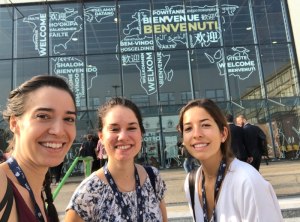
I’m still digesting the insane amount of content, ideas, thoughts (and food…) I took in over the course of those 4 days, but I wanted to share some of my experiences while they’re still fresh in my mind.
I’ve been struggling to figure out a method to present this in a clear, organized way, as my experience itself was anything but (in the best way possible!). The number of events I attended, people I met, new information I learned, is a lot, and I think it makes the most sense to present this in the way that I originally tried to understand it and its wonderful chaos.
Back in Boston, a few weeks before departing, I sat down and spent extensive time pouring over the list of events on the website, jotting down anything and everything that at all appealed to me. Conferences on food waste, cooking classes, wine and beer tastings…let’s just say the list was very, very long. As I was dumping all this information into one massive GoogleDoc that would turn into my lifeline over the course of the festival, I knew I would have to pick and choose – some events were at the same time and it would be impossible to go to everything, as much as I wanted to!
I think it’d be an exaggeration to say I had a “strategy” for Terra Madre Salone del Gusto (from here on out referred to as TMSG), but this picking and choosing was definitely thought out, and it largely had to do with this year’s theme and structure.
…
Every two years when TMSG rolls around, a theme is chosen around which the events and topics of discussion are centered. The theme must be global and representative of the current happenings in our food system, as everyone around the world is meant to take part. And this theme does not begin or end with TMSG: the discussions and events began long before the actual festival, with chapters all over the world creating their own initiatives, and international challenges like last fall’s Eat Local Challenge and this month’s October EcoChallenge.
This year, Slow Food International, the organizers, chose Food for Change. What this means is that Slow Food has committed to a “global campaign to raise awareness about the relationship between food and climate change”. Obviously, this is something that concerns everyone on the planet and thus is quite appropriate!
In addition to this overarching theme, there are then 5 Thematic Forums in which the events and discussions can be further categorized. This is brand-new for this year’s TMSG and, in my opinion, was a really effective way to organize the vast range of topics a hefty theme such as “food and climate change” can cover.
More detailed information on the 5 thematic forums can be found here, but below is a quick rundown with some photos I took, and a summary of each area copied from Slow Food’s website.
To give you an idea of the physical setup of all of this: TMSG was held at the Lingotto Center in Torino (the same home as the 2006 Winter Olympics!), in 4 gigantic halls filled to the brim with vendor booths, eateries, discussion panels, and one 4-walled, closed-off exhibit for each of these thematic forums. These were almost like “mini museums”, and had beautifully curated illustrations and statistics about each forum. I really enjoyed taking my time and going through each exhibit, one by one, reading it up and down to get an idea of each of these areas of the food system and their impact on climate change.
Thematic Forums
Slow Meat
The Slow Meat forums are focused on quality livestock farming, animal welfare, the importance of protecting biodiversity and native breeds and the problems caused by factory farms. Attention is also paid to the topic of food choices and awareness-raising campaigns that aim to emphasize the importance of more conscious eating habits.


Slow Fish
The Slow Fish forums give space to the relationship between the seas and the environment—from microplastic pollution to the risks generated by the overheating of the world’s oceans—as well as ocean grabbing and the challenges facing traditional fishing communities, the environmental damage caused by salmon and shrimp farming and certification schemes in the seafood sector.


Seeds
The forums dedicated to seeds explores rural seeds, the role of farmers who act as custodians of traditional knowledge and skills, the many types of food garden (school, urban, the Slow Food gardens in Africa) and soil fertility. There are also targeted meetings on spices, oilseeds and their properties and historic gardens that preserve heirloom varieties of fruits like apples, figs, bananas and oranges.


Bees and Insects
The forums on bees and insects look at the strong link between agricultural models and the well-being of bees, different apiculture models, different types of bee (black, stingless, etc.), honeys, the importance of insects to agriculture and insects as a “new” food source.


Food and Health
The food and health forums explore the impact of our food choices on our bodies and the consequences of widespread pesticide and antibiotic use in farming. They also look at salt, sugar and fat and the differences between industrial and artisanal products—which can we choose and how can we consume them to minimize the risks to our health?


From a visitor’s standpoint, having this set-up made the process of “picking and choosing” which events to attend so much easier.
I wanted TMSG to be more educational than anything for me: I had a goal to make sure I learned as much as possible, in as many different areas as possible. Having this set-up made it simple for me to say, for example, “Oh, I wrote down 5 events in Slow Fish and zero in Seeds, maybe I should attend this class on French legumes instead?”…because when else would I be able to learn about such a random topic? This idea motivated a lot of my choices, and I started choosing as many unique, off-the-map topics as possible.
This is also why you might notice that I didn’t go to a lot of “Italian-related” events. You might be thinking, “Uhh, you’re in Italy…why?” This was done purposely, my thinking being: I’m going to be in this country for the next 3 months; TMSG hosts countries from all over the world. I would have plenty of time to immerse myself in Italian food and culture in the coming weeks.
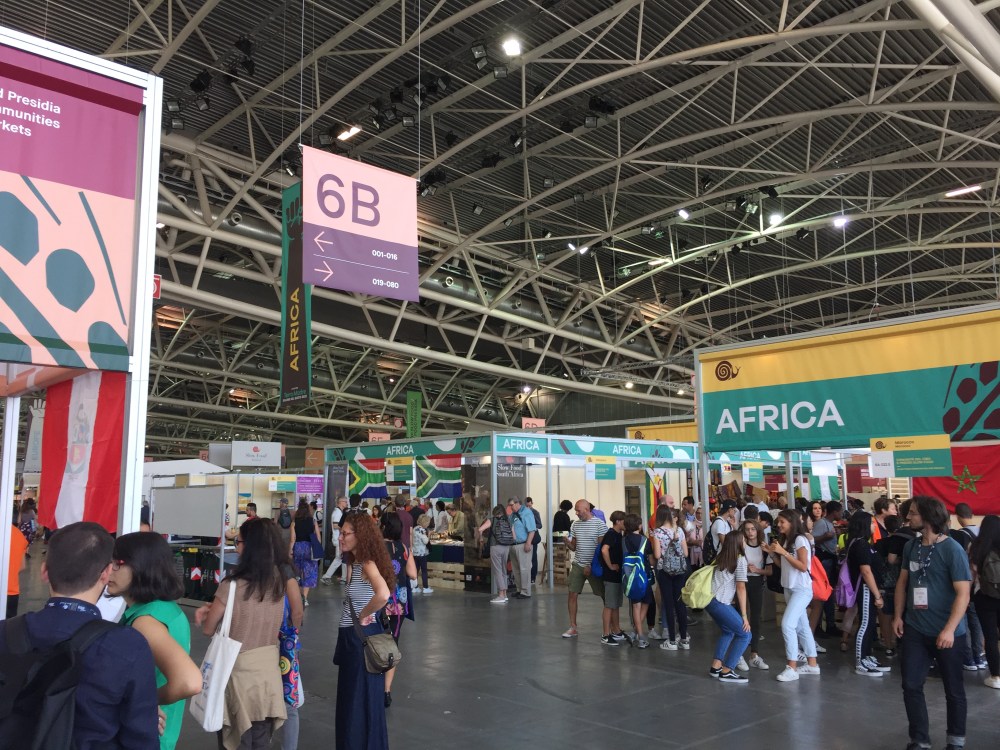
For now I wanted to use this opportunity to learn about the hundreds of other countries who came all this way to this northern Italian city to share their unique food items and stories they brought with them. Who knows when (and if) I’ll be able to visit Uganda, or the Philippines, or Brazil, and talk to the very people who make these traditional products found nowhere else?
Those are some of the factors that went into to choosing the events I attended, and even though I missed out on a few things I really wanted to go to (you can’t have it all!), I loved the ones I did attend. And I definitely learned a lot of random things I never thought I would!
…
The types of events at TMSG can loosely be broken down into three categories: forums/conventions, taste-workshops, and booths/food stalls. Each of these relates back to one of the thematic forums mentioned above.
One quick note about the insane logistics of this thing: the LANGUAGES! As you can imagine, people from all over the world attended, bringing with them 100s of different languages…yet somehow we were all able to attend the same lectures and discussions? The hidden heroes of this whole, gigantic thing were the translators. Anytime a large discussion was involved, you had the option to put on a headset and program into 4 or 5 different languages, the magic-makers hard at work in their little booths in the back. I can’t imagine the coordination this must’ve taken for a festival of this level, with this many events happening all at once. So thank you, translators, for allowing all of us Slow Food enthusiasts from around the world to understand and participate!
Forums/Conventions
These ranged from 10-100+ attendees, held in panel-style where the speakers would each have the floor for 10-15 min, ending with an open discussion with the audience. I hopped around to a bunch of these; I will spare you from reading about them all, as I kid you not, I have 20 pages of notes, but there were two or three talks that really hit home for me. Here are my biggest takeaways from those few!
Fighting Food Waste with Intelligence and Creativity.
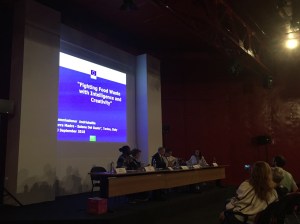 This was the first talk I attended at TMSG, and the one I was most excited about, given my work with food waste at Eataly and my overall general interests in the sustainability sector.
One of the great things about these conferences in general was the diversity of the panel members: to hear perspectives from countries from all corners of the world in regards to the same larger problem, and their unique solutions customized for their particular location, had a strong unifying effect and was very powerful. On this panel alone were representatives from Italy, Senegal, Ukraine, the Philippines, and the European Commission.
Biggest takeaway: We’re all wasting food, but the causes of waste differ in the global north vs. the global south.
This may seem obvious: of course the causes of a problem will differ from place to place; however, up until this point I had never heard it explained this concretely.
So what is the difference? In the global north, the majority of food waste is due to overproduction and improper storage. To put it simply, most northern countries are producing more food than is able to be bought and consumed in a timely manner before it goes bad.
Why?
For one, we live in a culture of overabundance. This of course is a luxury, but it also results in huge amounts of unnecessary waste. To bring up the topics discussed at another conference (We Are What We Eat), our “Fast Food Values” convince us that “more is always better” (Alice Waters).
Think about your local supermarket. There’s a reason why there are people working around the clock to stock shelves: people instinctively gravitate towards overflowing displays, and sales are shown to suffer if products are not stocked to the brim. But what ends up happening to that overflowing display, especially if it’s something like fresh bread that has to be sold day-of or else it goes stale? Is the gain in sales as a result of a full display worth the loss of what ends up in the trash at the end of the day? This practice is obviously bad for the environment, not to mention bad for business: waste results in money down the drain with unnecessary production costs, disposal costs, labor costs…the downstream effects are huge.
On the idea of storage, something as small as placing an apple next to a kiwi can cause unnecessary spoilage. Did you know that apples secrete a chemical that accelerates the ripening of other fruits?! You may notice this on a smaller-scale in your fruit bowl on the kitchen counter, but more importantly, businesses can easily suffer from large-scale spoilage in their warehouses before food even gets on the shelf.
Storage methods, purchasing habits, donation programs…these are just a few ways for businesses to minimize food waste. It’s in their best interest to pay attention to things like this, as “every $1 businesses spend on food waste prevention programs saves $14 in operating costs” (Vytenis Andriukaitis, European Commissioner).
While the causes of food waste in the global north are more directly related to business and purchasing habits, in the global south its mostly an issue of poor infrastructure. This also means it’s an issue of food loss, rather than food waste.
Why is wasting of food in the global south not happening at the level it is in the global north? Panelist and chef Jose Antonio Miguel Melchor from the Philippines puts it simply: “Countries like ours cannot afford to waste food.” As many food cultures originated and like many cultures, still practice today, his is one that has tended to stay true to its “nose-to-tail” style of cooking, i.e. using every ingredient from start to finish, simply because conditions (income, availability of food, etc.) do not warrant the “luxury” of a wasteful lifestyle.
When panelist Cheikh Thiam, who left his home city of Dakar, Senegal to form an eco-village in the surrounding countryside, was asked to participate in World Disco Soup Day, an international event held by Slow Food where soup is made from scraps of food to raise awareness on food waste, he had to decline, explaining that in his village “after lunch, children go around with buckets and collect scraps to eat…We do not waste any food.” A model that does well in the global north to reduce waste has no need in this area of the world.
Food in the global south is not being wasted in the same way as it is in the global north, but it is still being lost – what does this even mean? The idea of“food loss” was completely new to me with this conference.
As moderator Ursula Hudson from Slow Food Germany explains: “Statistics about food waste do not include the food that is lost before harvest, i.e. food that is overproduced and left on the vine to rot- these are considered food LOSSES.”
The level of food loss in the global south was detailed by Thiam: “Each year in Senegal, at least 88 tons of mangoes are wasted.” He went on to say that this astounding number is actually “an underestimate due to travel restrictions that prevented proper measurement.”
Infrastructure does not allow the harvest of these fruits in time, perfectly good food is left to rot, and a continent like Africa, which is completely capable of feeding itself, is forced to rely on imports, rather than exports (Thiam). It’s even more ludicrous when you hear that 1/3-1/2 of all food is wasted in a world where hunger is rising (Hudson).
Thiam brings up the idea that the entire concept of food waste is a result of a general undervaluing of food itself, and the loss of a spiritual connection to food that made up a large part of the culture of our ancestors: “We waste food because we take it for granted. Seeing the colors, shapes, smells, and patterns of food and being overwhelmed – it’s not something that everyone shares.”

Daria Malakhova from Slow Food Ukraine agreed: “If we loved food, we wouldn’t waste it.” She explains the nostalgia that comes with the smell of a ripe tomato that doesn’t even come from the tomato itself, but the humble green stem at the top, which she says can be used for delicious broths.
We’ve gotten spoiled with an overabundance of food: availability is another one of the “Fast Food Values” mentioned by Alice Waters, and it “makes us think we should be able to get whatever we want, wherever we are, whenever…it spoils us, the seasons stop mattering, and indigenous foods and cultures become irrelevant.”
Malakhova goes on to say that “[i]t’s good to feel hunger sometimes, to eat when you want to eat, and actually enjoy looking forward to a meal,” rather than eating by the clock, or eating because it’s simply “time to eat”.
What I took away from all of this is that our approaches to solving food waste are going to have to be different. There is no universal cause, and “we are all wasting” (Andriukaitis).
Spreading an appreciation of food can be difficult, but in my opinion that’s what Slow Food is all about! Just as the majority of food waste happens in our own kitchens, these spaces also have the potential to make a huge impact. Whether its sharing your love of food with others, utilizing ingredients to their very end, or paying attention to what you put in the trash, your actions can have a huge effect on others – your families, friends, even the businesses you choose to buy products from. Small changes can ripple upwards and it makes this seemingly overwhelming problem all the more tangible.
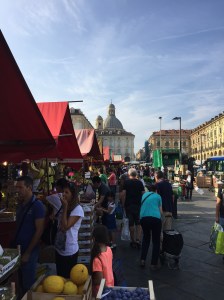
“Today, about half of the world’s population lives in urban areas. By 2050, 66% of the human population will be urban, compared to 30% just 100 years earlier.”
The major question of this conference was how, in this time of tremendous growth, cities and their surrounding rural environments can work together to maintain profitable relationships, and promote overall sustainable development. To note, this panel was represented mostly by wealthier Western countries like France, Italy, England, Denmark, and the US.
Biggest takeaway: The involvement of public institutions is critical in linking city and country.
More specifically, public institutions like schools and local municipal governments.
The idea of increased education at schools regarding sustainable choices was something universally discussed throughout TMSG. I can understand why as, at least in the countries represented in the panel and most western countries, almost everyone goes to primary school: the potential to educate and instill sustainable choices at a young age is huge.
Several discussed that school lunch is the perfect opportunity to do this. “If we were to spend just 20 minutes every day eating together at schools, that’s 1,500 hours a year to convince kids to make smart choices,” said panelist Kenneth Højgaard.
Højgaard is the chef and culinary entrepreneur of Copenhagen Food House, which was born with the purpose of improving the quality of public meals in the city – in schools, nursing homes, shelters, etc – as they make up over 80,000 of all meals served in a year.
In an effort to strengthen the relationship of the city with local farms and increase the quality of produce in these public meals, the Copenhagen Food House had a goal of going 90% organic – and in 2015, they were at 87% (Højgaard).
Projects like this prove that a mutually beneficial relationship between city and country is possible; however Højgaard says he always gets the same reaction when he firsts presents this idea to public institutions: “We don’t have the budget.”
He explains, rather comically, that these institutions then go through the 5 stages of grief until they arrive at acceptance: “First you need to convince them it is necessary, then you have to ignite a desire for change through first hand experiences, give them the required knowledge, show them it is possible through past examples, and make them proud of their accomplishments.”
In the end, public institutions working with his organization have been able to drastically improve their food programs within their previous budget, and local farms surrounding the city have a reliable purchaser of their goods. City and country are able to mutually benefit.
Another model of school involvement is taking place in London at Burrough Market, where chairman Donald Hyslop has worked with local schools to sell produce grown at their own gardens at one of the largest city markets in the world. In this way students are not only able to be actively involved in the growing process, but also able to learn valuable skills in communication and business. Another point for school involvement!
On the side of local municipal governments, Chantal, coordinator of international panel of sustainable food systems, emphasized the importance of policy in the relationship between cities and country: “The city and country are becoming less dependent on each other due to globalization and industrialization, international markets, and price motivation, and this is all exacerbated by policies.”
What we need instead, she goes on to explain, are policies that support this connection between city and country. And how to we get these policies? Through strengthening local level policies and developing regional food hubs that can “amplify the voice of cities in national discourse”. This is key, as once these discussions are “at the national level, they can be better supported and more local level decisions can be enacted.”
She stresses the need to encourage “outside-the-box thinking…[as] new energy can bring up new ideas”, whether this new energy comes in the form of greater citizen participation, or a change in local leadership.
This led to a question about how to integrate food policy in municipal governments if they’re not open to it, or if there is not a clear leader responsible for these policies. Chantal stressed the importance of “building a culture of sustainability that lasts long term, despite electoral cycles.” For example, there are some cities where trainings are run by citizens with long term staff to educate them on certain issues that are important to their city. Having a training program in place creates a structure for when new officials are elected, and a standard for what is expected.
She went on to boldly say that if that doesn’t work and they’re still not interested, there’s always the “do now and ask for forgiveness later” method – “They will become interested eventually.”
As with any relationship, communication is key: city and country will need to maintain an open and frequent discussion to develop sustainable mutual growth. While the two are different, they are forever linked, and rather than be considered separately, they should be viewed as one collective “agropolitan region” or “foodscape”, more terms I hadn’t heard of before this conference.
“A foodscape is a real and metaphorical place that is the intersection of economic, political, social, and cultural factors that cover all production phases of food,” explains Ferdinando Mirizzi, a professor and chairman of cultural anthropology from Basilicata, Italy. This inherently concerns both the countryside, where most food is grown and produced, and the city, where most food is consumed and sold.
As any anthropologist would do, Mirizzi goes on to relate this to a more universal topic: identity.
“There are no pure authentic food systems, like there are no pure identities. Just like cultures, they’re not locked in and closed.” In other words, a foodscape – made of city and country – needs to be viewed as having a constantly fluctuating identity that requires consistent reworking and tuning of its individual parts.
“Food is the expression of the land, the soil, the ecological environment, the community of people who live on it, consume it, and sell it – the sum of collective individual identities” (Mirizzi).
This level of fluidity is high in cities: “With migrant flows, we constantly take in new foods, flavors, and foodscapes.” He brings up the example of the Mediterranean, where lemons, which make up a main staple of Italian and Greek cuisine, were previously unknown to these cultures before they were imported by the Arabs. “Food is a social and cultural event from an anthropological perspective – through food we can understand the deep changes going on.”
We can only understand how cities and countries should work together by examining changes such as these, especially as the world continues to be redesigned by globalization. He concludes by emphasizing the importance of going “back to local identities and stories to provide deep meanings of food within its own social communities.” Only this way can we “increase the level of visibility of pipelines in the city to restore its relationship with the countryside.”
Already the farm-to-table movement has gained popularity in restaurants both in the city and country, and these conversations are happening more and more frequently with CSAs, farm apprenticeships…the list goes on. The interest in “where food comes from” is growing and models such as these prove that a sustainable relationship between urban and rural is possible!
Other conferences attended:


Poison on the plate
From field to restaurant: power to the women!
Where do spices come from?
Excellent examples of sustainable nutrition in universities
Slow Food travel: travelling according to Slow Food
Women as agents of change: indigenous peoples’ food systems and climate change
Small-scale beekeeping
Indigenous chefs: why they are key players in the food system
Bread for change: how the world of bread changes and how bread changes the world
Climate change: how to face the biggest challenges of the coming decades
Small producers and big distributors
Food as a response to crisis
Taste Workshops
These were what I was most looking forward to, and I signed up for a bunch more when I got there once I realized how much I loved them! They’re basically 1 hr long cooking classes held by different chefs, producers, even homecooks – any specialists in the specific ingredient or dish from their culture that they bring to the table. This is where I really tried to take some “out of the box” classes, making sure to choose different categories of food from rice, coffee, chocolate, fish, and more.


Breakfast with the producer: chocolate from Colombia


The Philippines: a land of rice


Mountain fish with Artur Martinez and Marc Ribas


Uganda’s diversity of bananas and millet


How to say coffee around the world


Almond sweets: from Asia to the Mediterranean


Booths/Food Stalls
Walking around TMSG, this is what you had the most contact with: the insane amount of booths set up in rows across all 4 halls, beautiful displays of meats, cheeses, fruits, veggies, desserts, grains, wines…everything, from all over the world. So many smells beckoning you to come closer and try – and you want to try EVERYTHING. I’m glad there were 4 days to take this all in, to walk up and down each row, or else I would have just stood in the middle of it all, overwhelmed by the choices.


Sustainability at Terra Madre
Exploring sustainability in Italy as a whole is a larger subject I am constantly researching during my time here, but I want to take a minute to address TMSG specifically.
As I’ve eluded, this was a rather large-scale event. To give you a better idea, here’s this fun sign I found at the event!
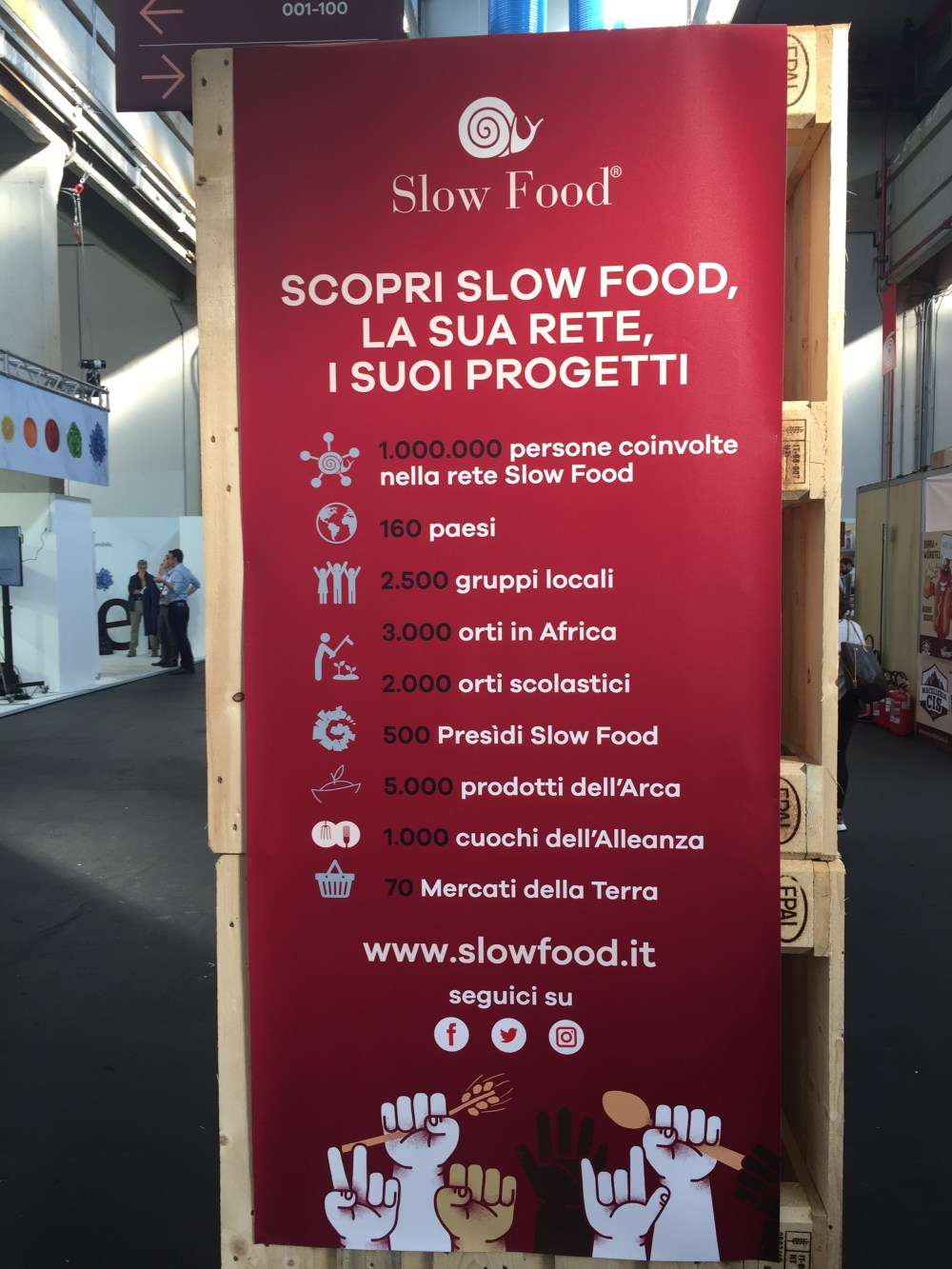
In other words, a lot of people, products, transportation, resources, etc involved. And that means the potential for a lot of waste.
I usually get bummed out going to a large event like this – a conference, concert, or baseball game – because it almost always includes the unpleasant sight of overflowing trash bins filled with plastic, food…not trash. Really? In this day and age? Why can’t we have better systems for such huge contributors of waste like these?
Luckily, I was very pleasantly surprised at TMSG. Guess what was the very first photo I took?
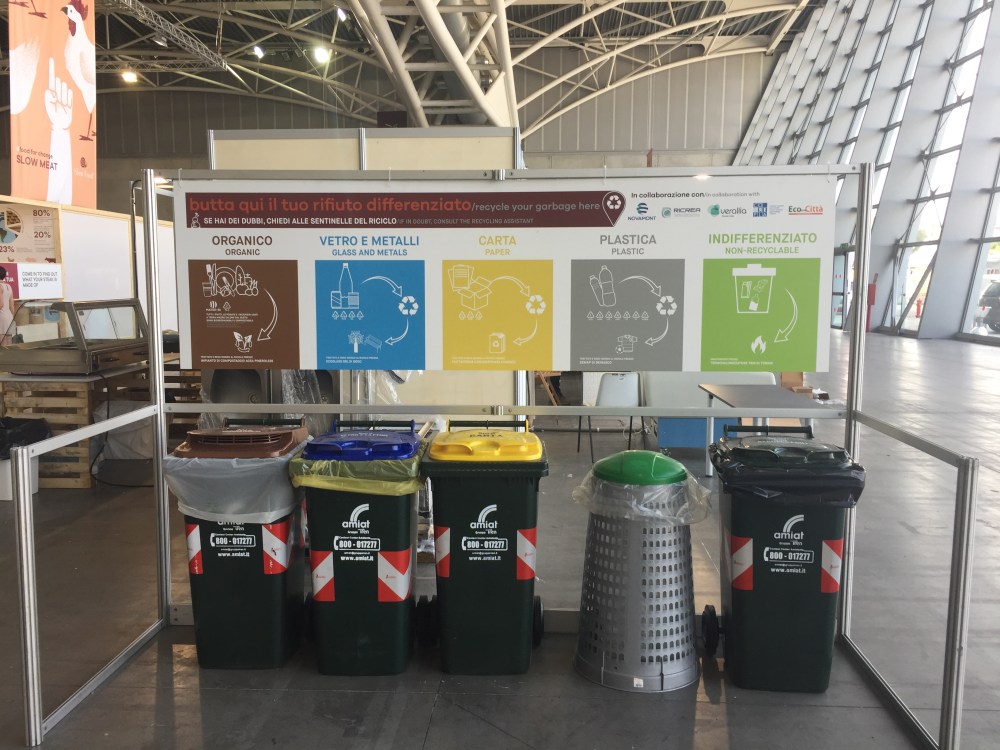
Yup, that’s right – garbage bins. Excited for the food and all, but look at this!
Being extra aware of food waste and waste in general these days, this was one of, if not THE first things I immediately noticed upon arriving at TMSG.
Waste collection procedures at events have always interested me – the logistics, if they really work, etc. I was really impressed with the way it was done here. Throughout the exhibition halls there were over 100 “ecological islands” (shown in the above photo) strategically set up between booths and eateries.
The variety of separation is one thing: there’s organic, metals and plastics, paper, plastic, and non-reusable. A whole other story is the fact that each station had its own volunteer there, all day, making sure you separated your items properly. The volunteers were trained by Eco Dalle Citta and were mostly students from what I could tell. I won’t stay they were the most enthusiastic (but hey, they’re in high school, what do you expect), but they did keep you on your toes! I at first had no idea all the little plastic sampling cups were compostable, and they jumped on it when they saw I was headed for the plastic recycling bin instead.
On the walkway between exhibition halls, there was a huge display of TMSG and the University of Gastronomic Science’s (Slow Food’s University in Pollenzo) collaboration with Systemic Event Design (SEED) detailing all the ways in which TMSG was built to be a sustainable event. I spent a lot of time reading this. These are a few of the things that fascinated me! (All facts from Slow Food’s posters)


Materials
- All food service items were made from Matter-B and cellulose pulp, provided by Novamont.
- To maintain cold chain during transport of food around TMSG, polystyrene crates are used provided by Corolla, and are reused by the restaurants that have prepared the meals.
- All T shirts worn by staff were made by the company Iren using Italian cotton – organic and without use of pesticides and fertilizers. Iran also provided all lanyards and are made from recycled PET
- Benches are made from recycled steel by Ricrea and will be donated to the city of Turin after the event.
Food
- Coffee grounds from all bars are recovered and reused as a substrate for cultivating edible mushrooms with Giardinone cooperative and Fungo Box project.
- Working with Banco Alimentare, leftover food is collected at end of day to distribute to charities around Piemonte.
- Napkins, tissues, and TP come from Lucart’s Grazie Natural line and are produced from reusable drink cartons.
- Around 5000 bottles are expected to be uncorked at the Enoteca (wine bar)! These are saved and reused to make panels and granules with Artimestieri.
- Used cooking oil in the kitchens will be reclaimed by MPoli for use in production of biodiesel, glue, ink, and soap.
Waste
- Every exhibitor received their own kit to sort their own waste within their stand.
- Banners and signs were printed on PVC sheets which will be reused by women in Genoa’s Casa Circondariale to make new products like bags and placemats.
- Stands are constructed using Greenpallet – sustainable pallets made by Palm – which will be used by Lurisia to transport merchandise.
There were countless other facts and statistics about power usage, transportation, and more. As an event that draws 1,000s of people every other year, from all corners of the world, sustainable design like this has a HUGE impact, and is necessary for an organization like Slow Food committed to “good, clean, and fair” in our food system. You can walk away from an event like this not only happy, full, and more knowledgable, but with the satisfaction that its environmental impact was minimized as much as possible.
This document is in Italian, but it contains an extensive description of these initiatives with SEED if you’re interested!
Takeaways
Can you tell I enjoyed this experience? I loved being immersed in so many things I’m interested in for 4 days straight. I’ll tie this up briefly because this has been a long post (and thank you for reading if you’ve made it this far!).
In the “Food and the City” talk I mentioned, one of the speakers, Chantal, said, “Food is an entry point to deal with food access, poverty, public health.” This so clearly sums up why I made the choice to get involved with food the way I have, and why I found this experience to be so rewarding and confirming of this decision. For me it always comes back to this. I believe that so many of our current problems come down to food, and these 4 immersive days proved that there are so many solutions out there. I’m feeling optimistic for the future!
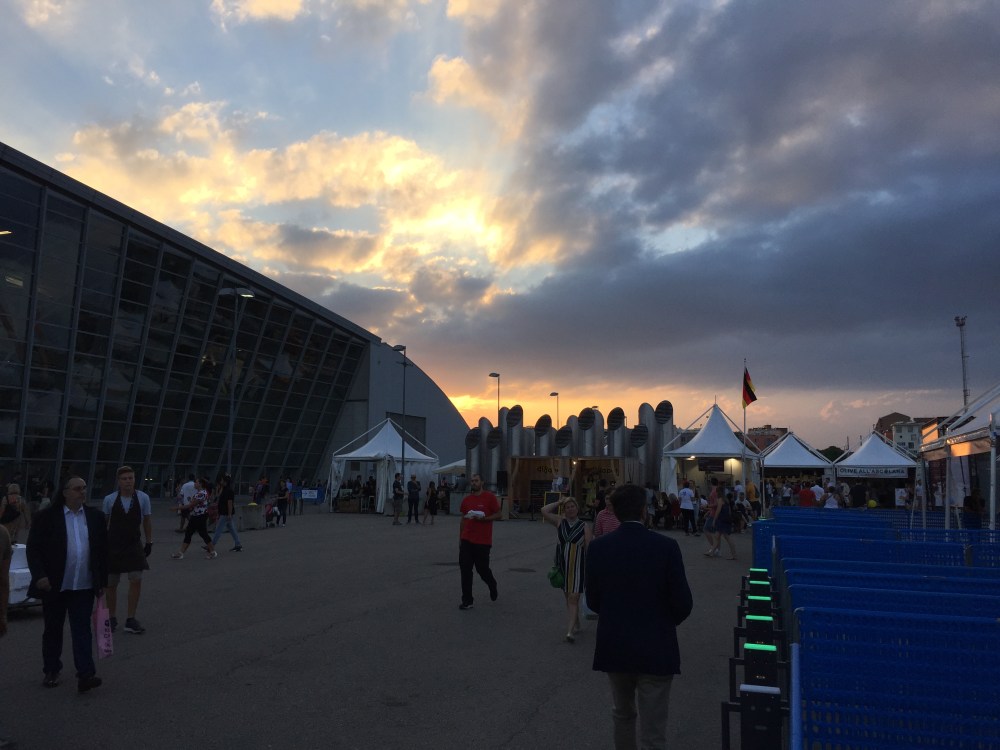
This was just the first 4 days of my 3 month long adventure in Italy! Continue to follow along on Instagram via @orchardeorto and @slowfoodboston, and stay tuned for posts about the olive harvest in Sicily and Tuscany, sustainability in Italy, and more! Anything particular you’re curious about? Ask away!
 Orchard e Orto