When it’s cold outside, we crave warm, bubbly, comforting dishes.
It’s a universal association that I’ve experienced not only in the depths of a Massachusetts winter, but also 4,000 miles away in the Italian countryside where this past November I arrived at peak rainy, drizzly season – the beginning of the Tuscan winter, my host Emma of Casa Pietraia tells me.
Today, back in New England, snow has been lightly and steadily falling all morning and thoughts of what I’m going to make for dinner float in and out of my head. I’m reminded of the power that food can have in warming our winterized, vitamin-D deficient bodies, and I’m transported back to the comfort I found in a Tuscan kitchen so far away from home.
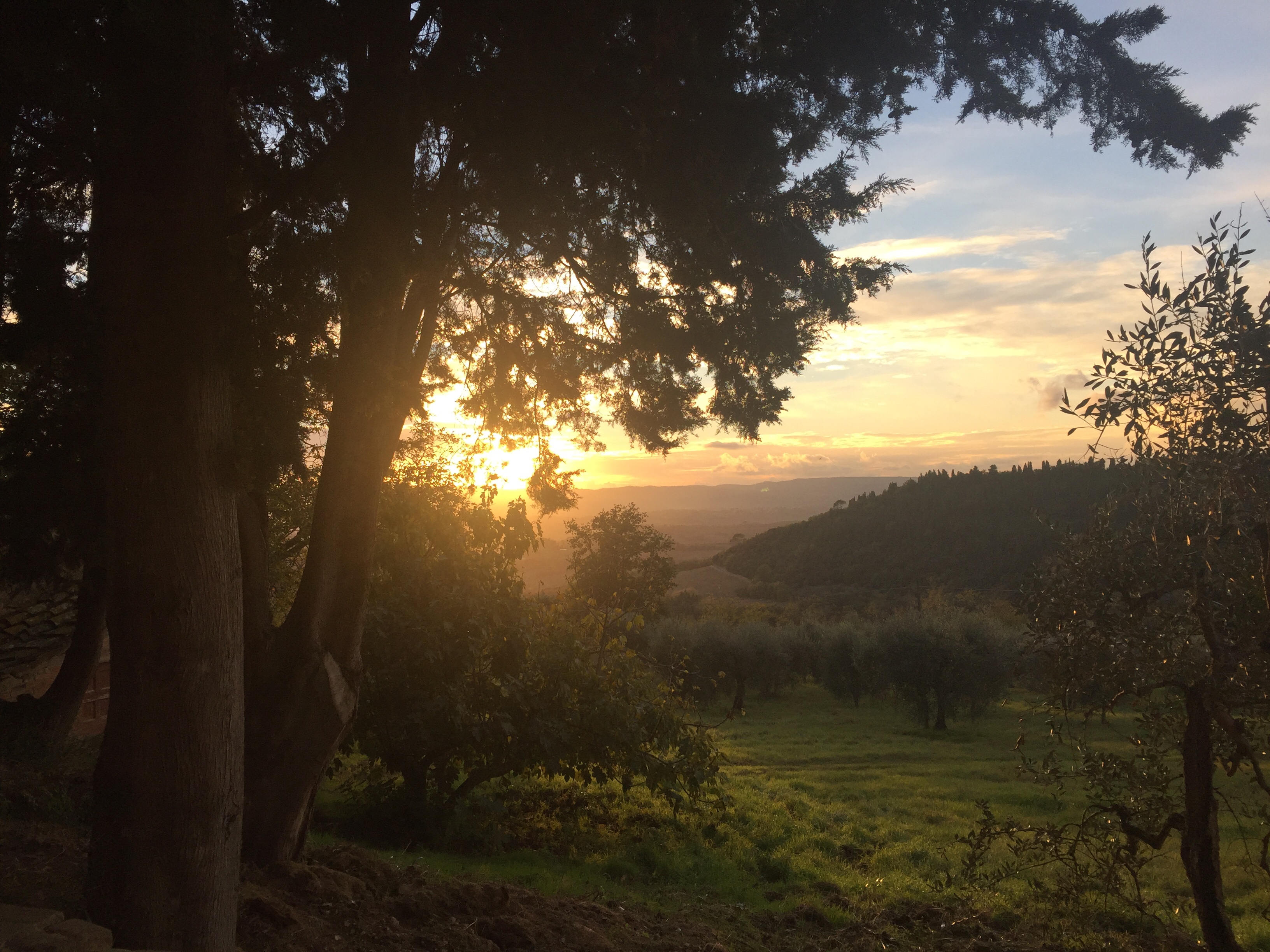
I reached Casa Pietraia in the last half of my 3-month stint in Italy, and over the course of 2 weeks explored the Tuscan countryside with the small farmhouse as my base. Like the rest of my trip, I aimed to learn about the regional cuisine and way of life, and the picturesque, family-run agriturismo hidden amongst olive and cypress trees, and the historic Chianti region, was the perfect fit.
…
I was first drawn to Casa Pietraia at the prospect of participating in their olive harvest, my initial curiosity then peaking when I found out that Emma is a classically trained chef and regularly holds classes for their guests. Being the only guest during the region’s slower tourism season, I felt spoiled with one-on-one lessons and was happy to have found the perfect person to teach me about traditional Tuscan cuisine.
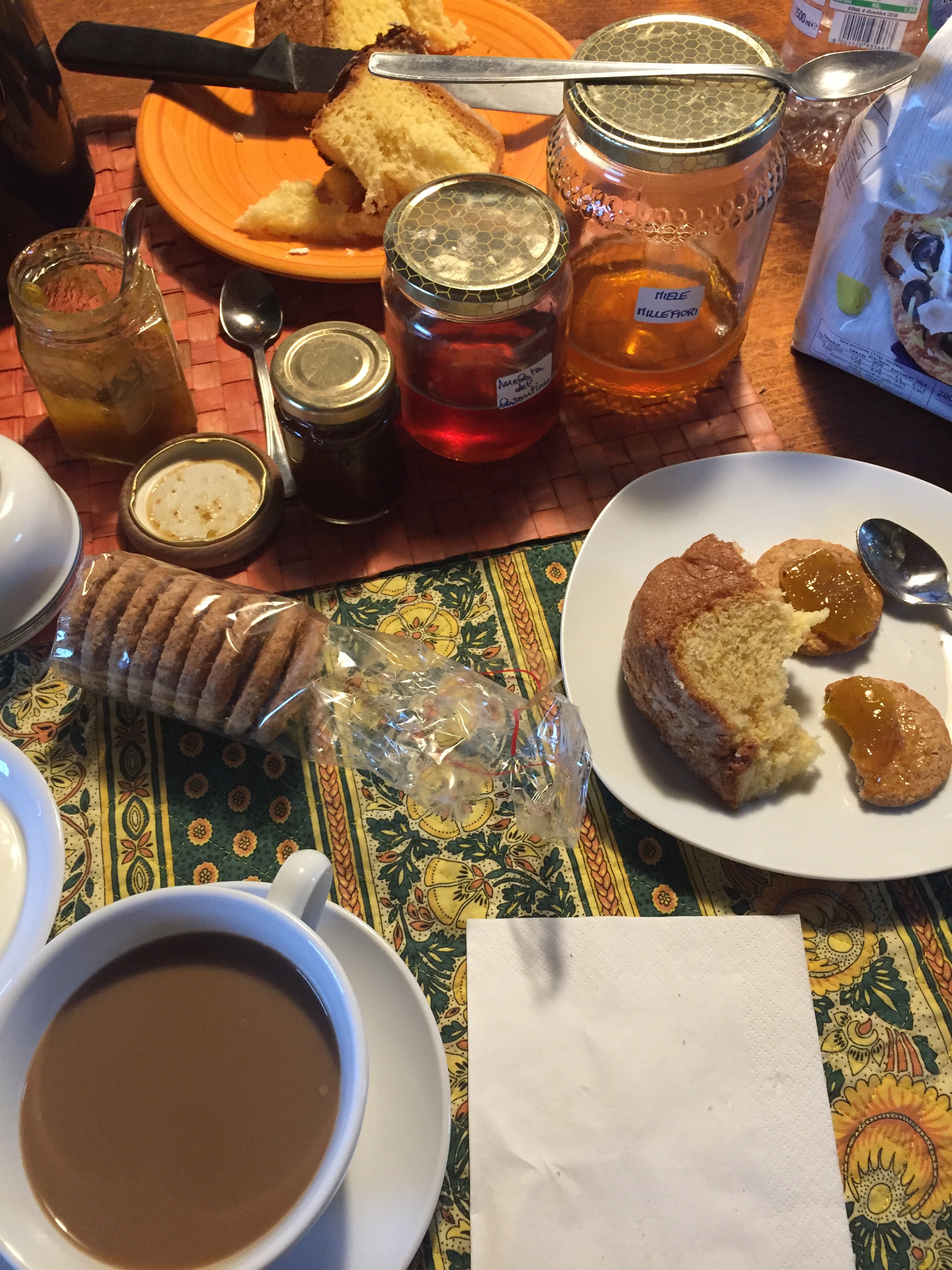
I’d start my days downstairs at breakfast with the family, which quickly became my favorite part of all my days in Italy: a cup of coffee that somehow always tasted better than anything I’d had in the States, some sweets bites to eat – homemade jams, honey from their bees – and the planning of my day. Emma, her husband Giancarlo, and their son Matteo became my dining companions for almost every meal for the next fourteen days, welcoming me into their kitchen where we’d discuss where I was off to that day, sharing food and advice with me. I’d then set off in my little grey Fiat, dodging raindrops and armed with a list of farms, restaurants, people and places to visit thanks to my gracious hosts.
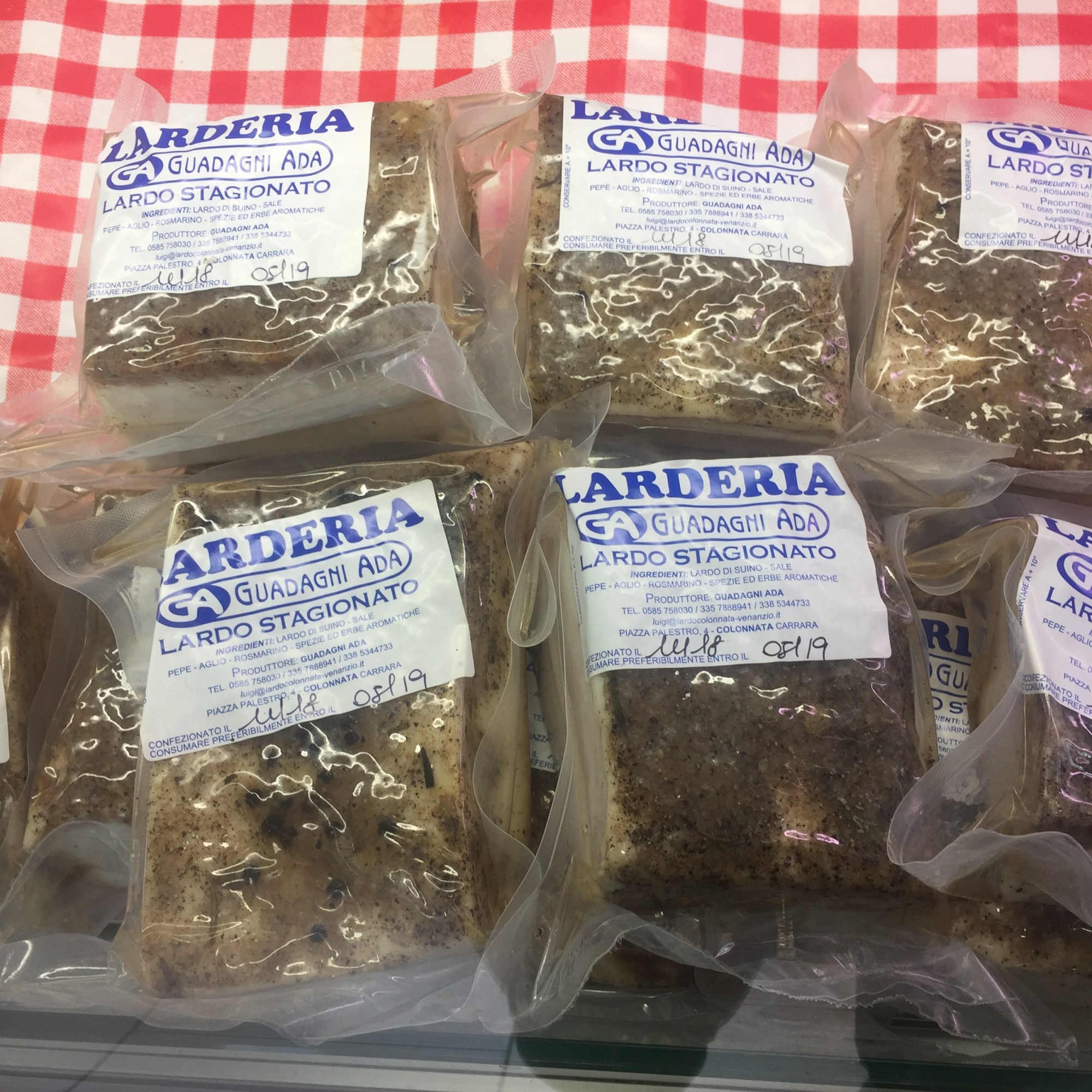
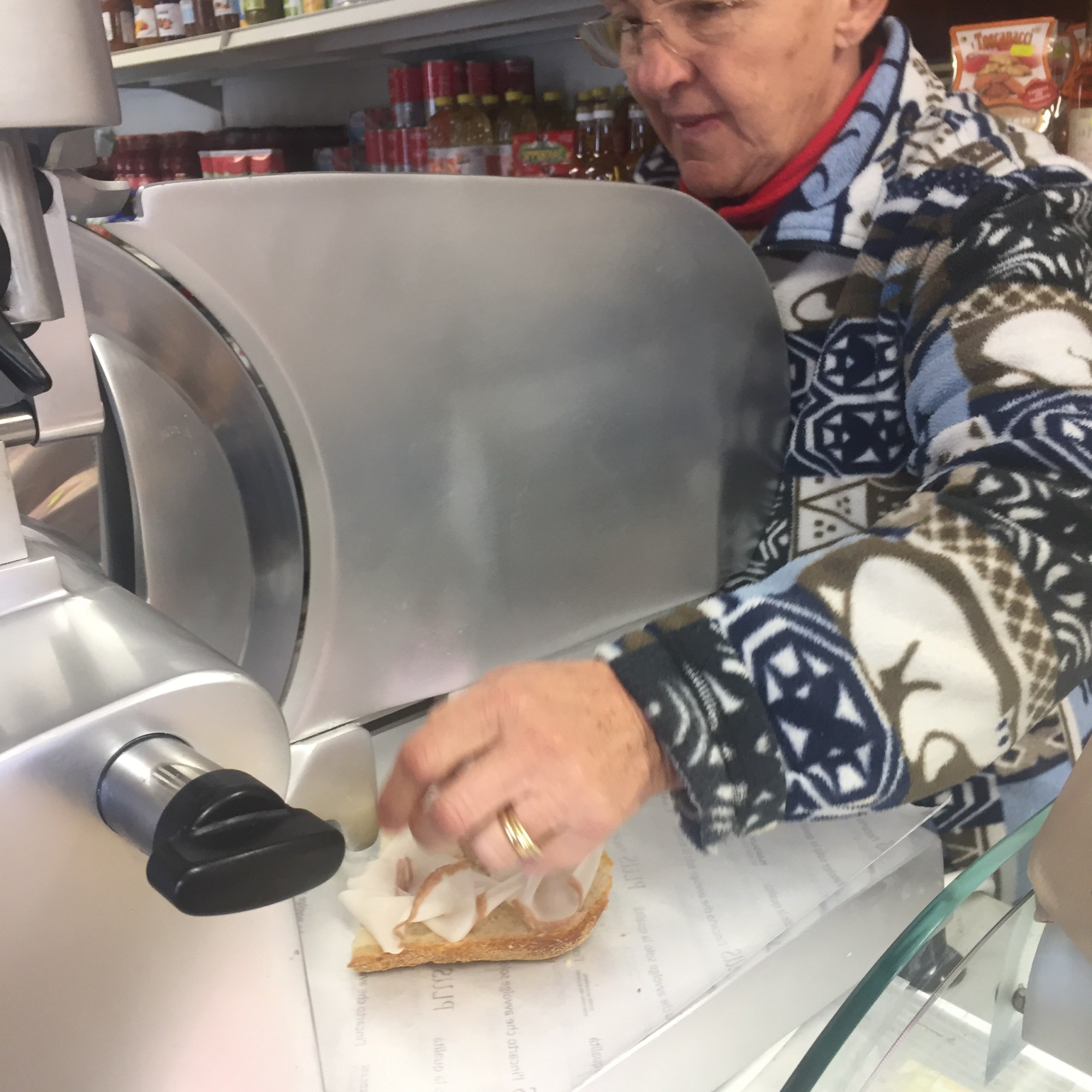
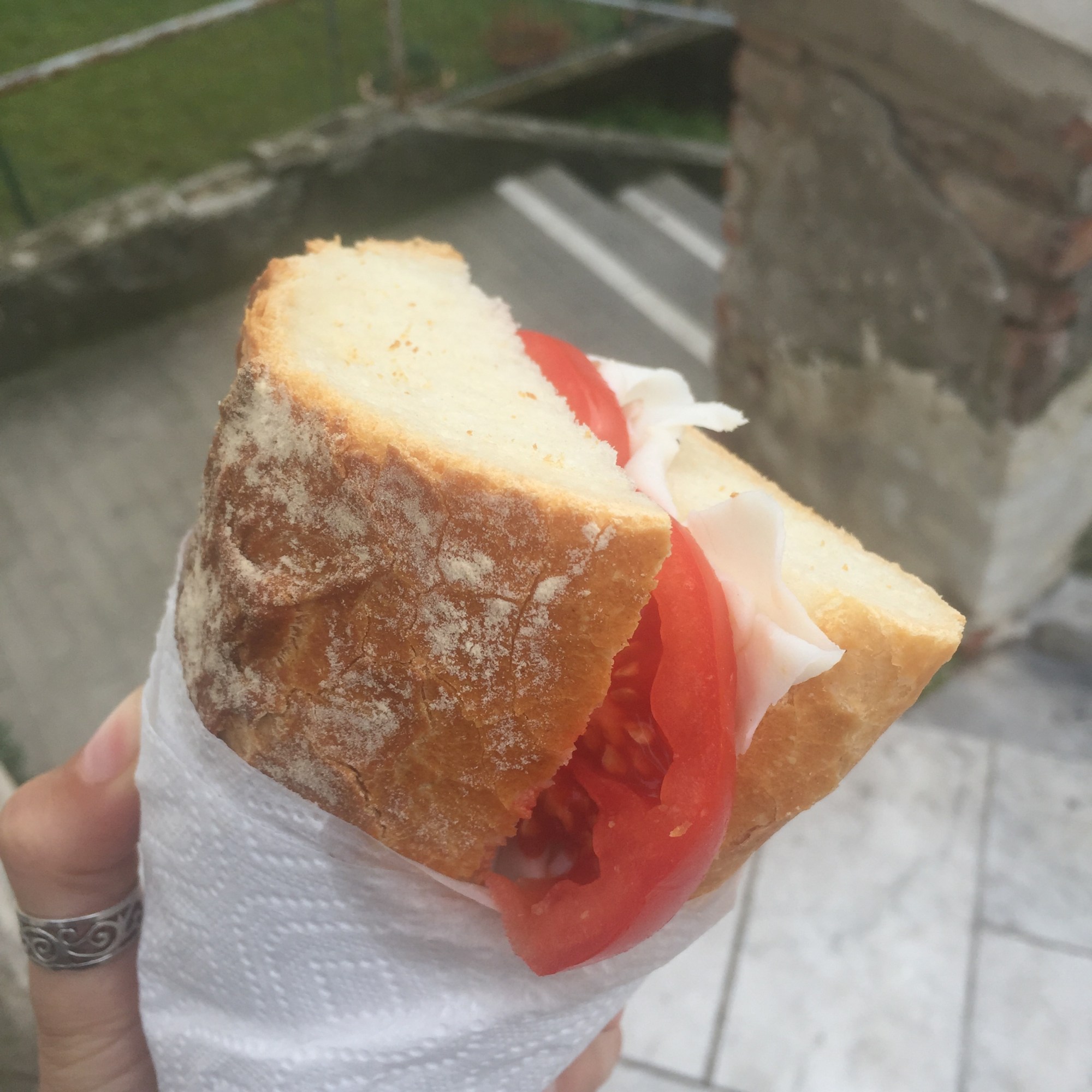
My day trips exposed me to the regionalized specialties my hosts made my taste buds salivate for over breakfast: flavorful porchetta piled in pillowy focaccia for the perfect, walkable streetfood at a popular spot loved by tourists and locals alike in Florence; pecorino and salumi in Pienza, made from the famous cinghiale (wild boar) that roams the Tuscan countryside (and whom like to unpredictably jump into dark roads at night, I quickly learned); lardo in Colonnata, fat aged and seasoned in the region’s famous marble slabs from Michelangelo’s Carrara, a specialty I was hesitant to try but proved me wrong when it was shaved thinly and delicately between a warm baguette; confetti in Pistoia, nuts or dried fruits encased in a sugar (or my favorite, chocolate) shell, which I brought back as a gift for the family, a favorite of Emma’s who also dabbled as a chocolatier in the past.
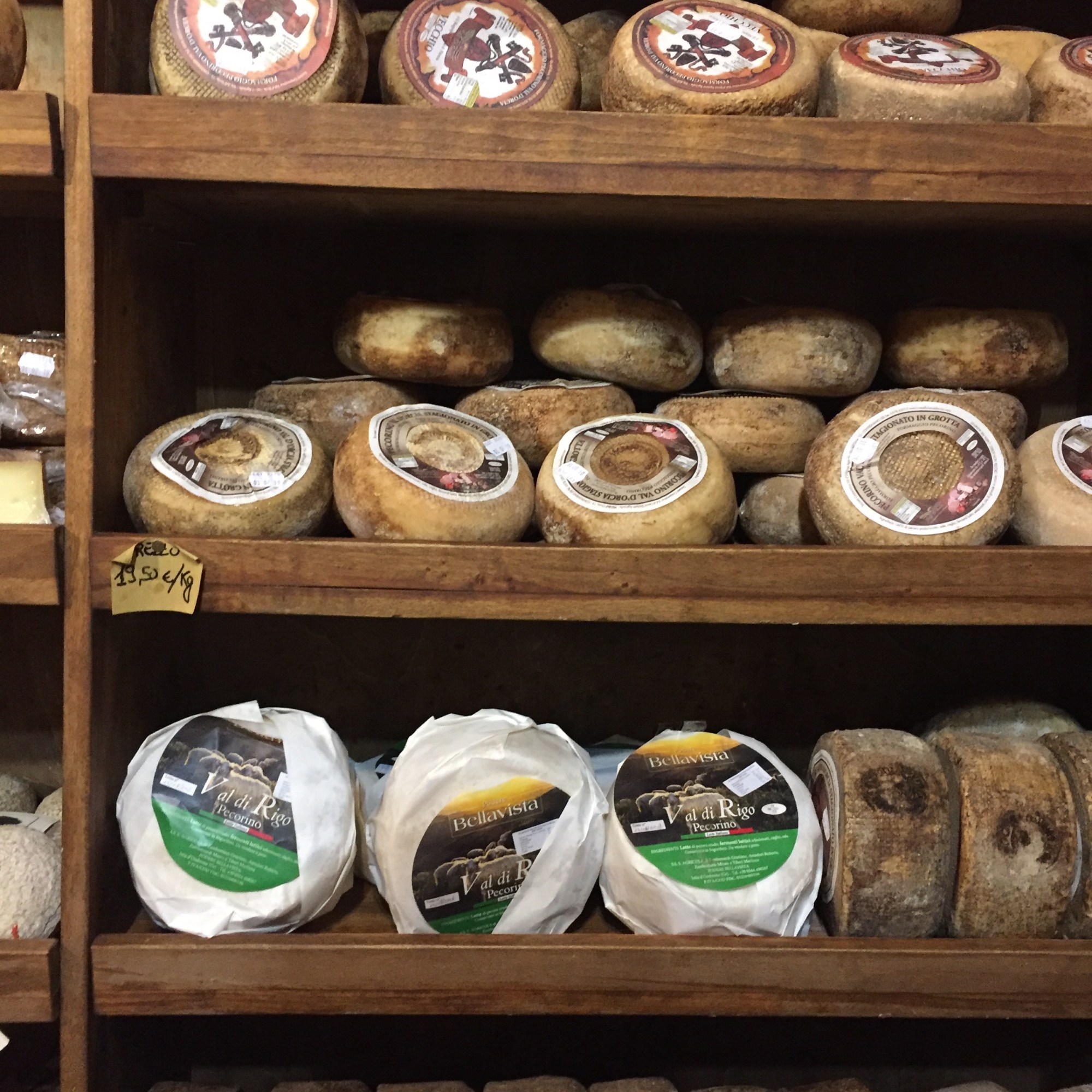
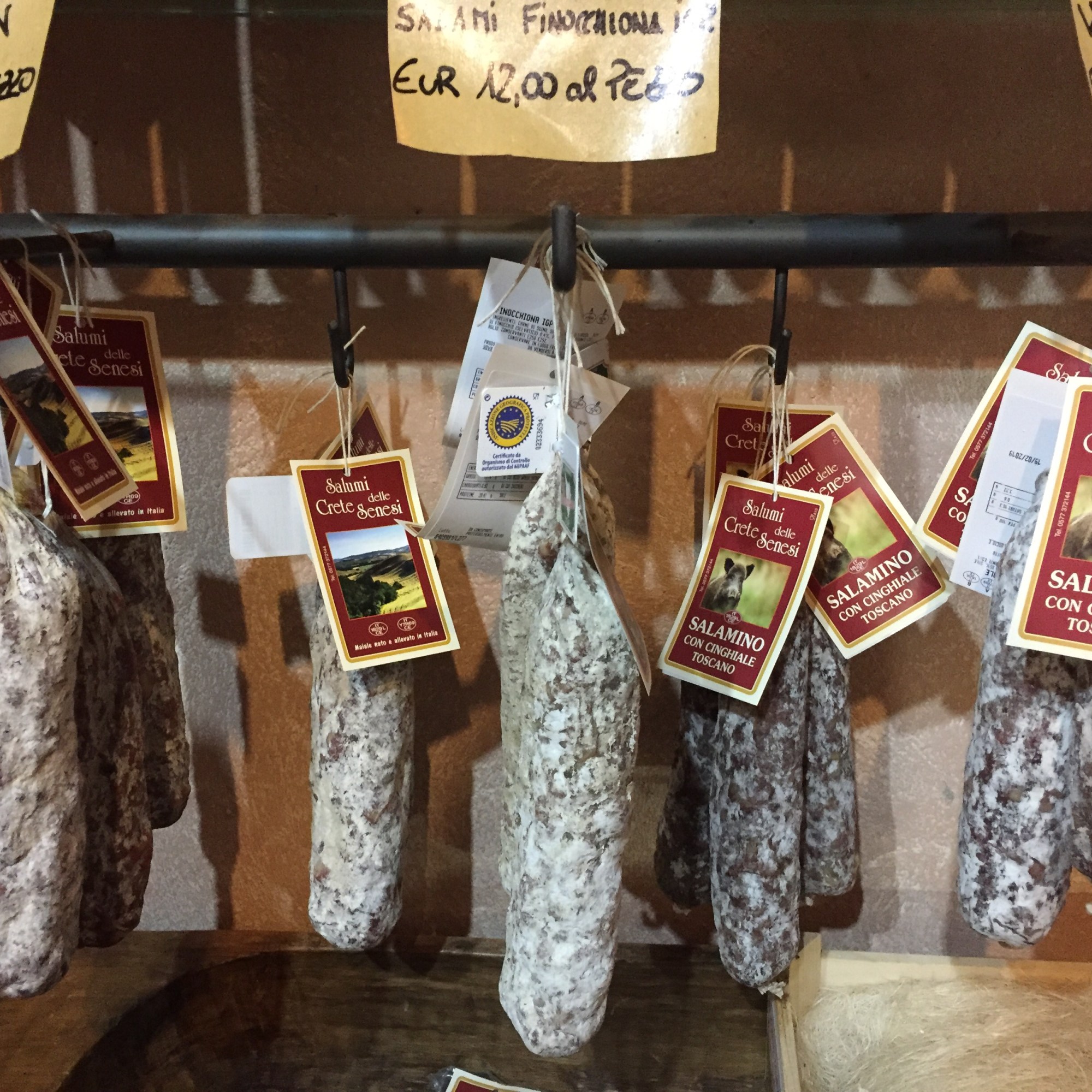
A particularly rainy and bone-chilling day spent wandering the slippery streets in Siena led to silky smooth squash vellutata, perfectly al dente pici pasta with wild boar ragù, and a glass of house red wine. I remember feeling perfectly content and warmed, happy to take my time then escaping the rain at the duomo in a slow, full daze, audio tour in hand. My appetite for comfort led me into one of the many pasticcerie for a sampling of typical Sienese sweets (dolci): panforte margherita (a dense and sticky “cake” made of honey, nuts, and orange peel), its slightly more savory cousin panpepato made with pepper, ricciarelli (cookies made simply of almonds, egg whites, and sugar) and pan co’santi (bread with dried fruit and coarse sugar on top). I savored my little plate of sweets between sips of espresso and again felt perfectly content watching the rain fall outside. It was one of the countless moments of my trip where I couldn’t believe I could surround myself with such beautiful sights and food every day.
But the warm glow of the kitchen at Casa Pietraia always drew me back for dinner, and after a day of adventuring I was eager to return to see what was on tonight’s menu.
…
From the very first night when I arrived to a dinner of the most tender beef stew and glasses of red wine that they drank like water (E’ come l’aqua per noi), I knew I would like it there.
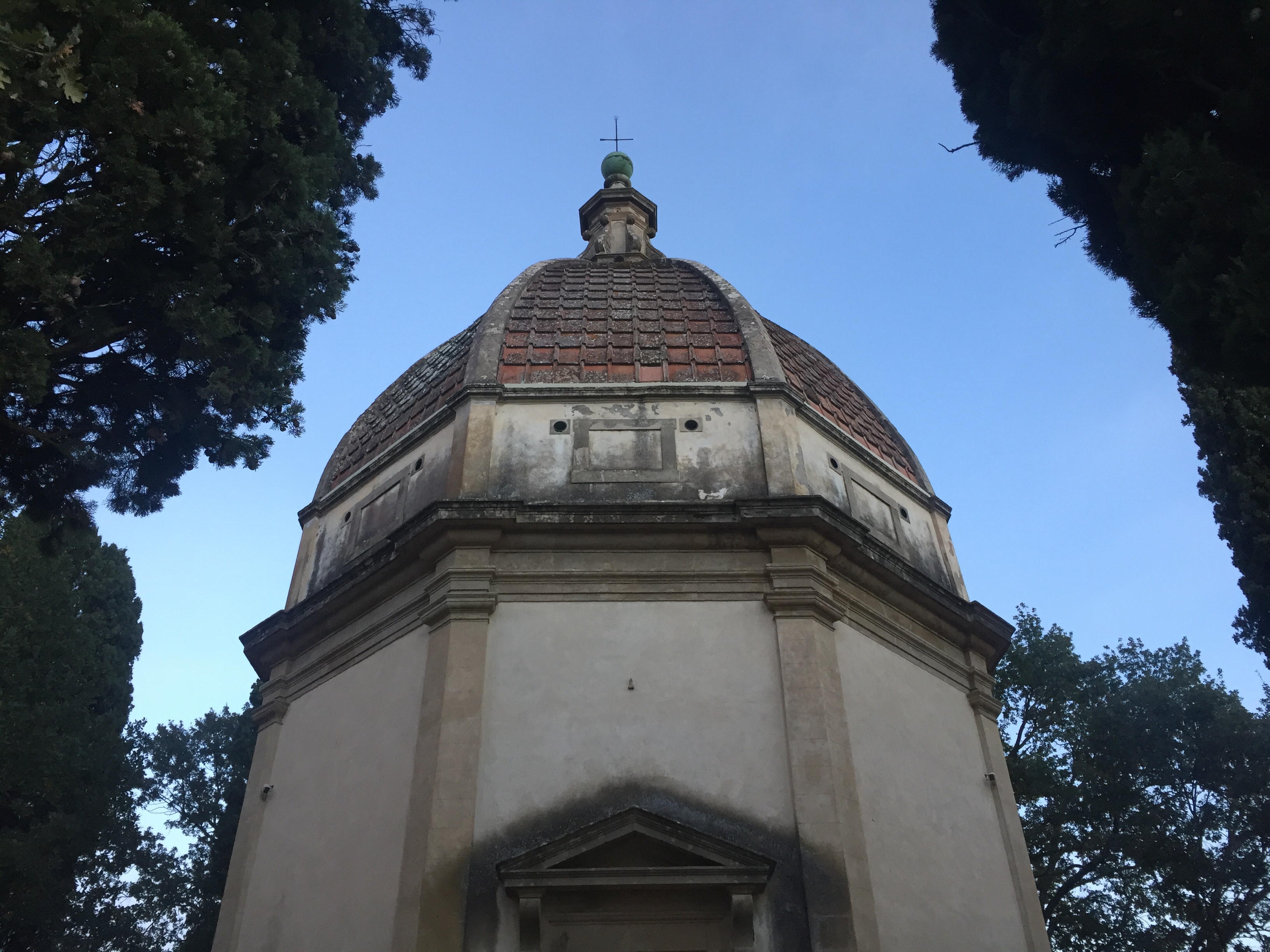
The kitchen was pleasantly warm from the ever-hungry caldaia outside, constantly fed with fresh wood to heat the entire house, and Giancarlo told me of the mysterious village of Semifonte that once surrounded their land and rivaled Florentine power. The only evidence that remains of the civilization is the 1:8 replica of Florence’s duomo that was constructed by the papal state to remind them of “who’s boss.” This Capella di San Michele Arcangelo would serve as a constant reminder of the history of the land I would spend the next two days immersed in the olive harvest.
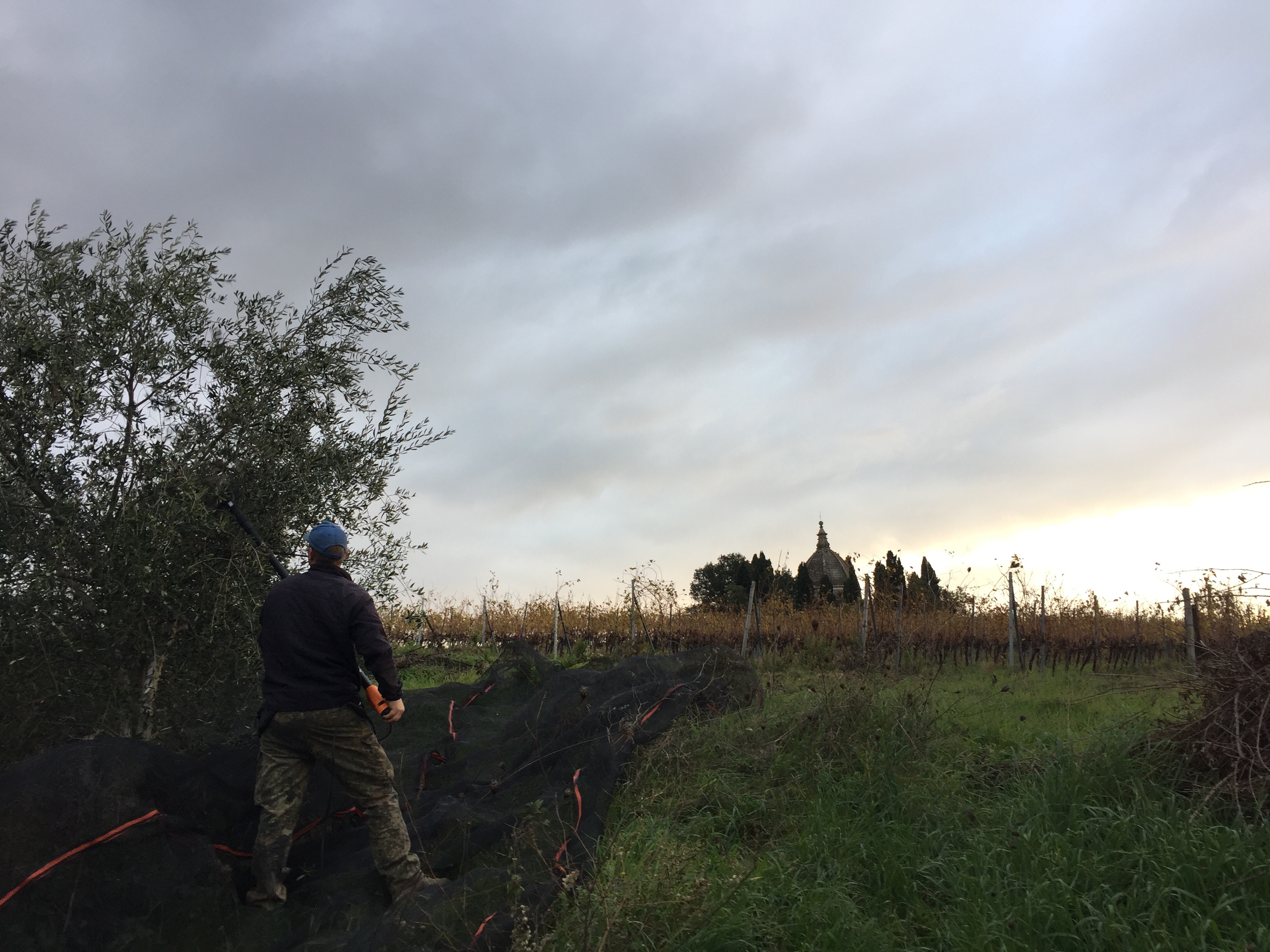
I had arrived at the very end of the family’s harvest, feeling lucky to even be able to participate as it would’ve already been over had it not been for a scheduling error at the local olive mill. It was a stark contrast to the warm, sunny Sicilian version I’d witnessed just a month before: the frigid wind blew briskly over the rolling hills, bringing with it misty, cold rain that slowly weighed down our many layers. The hilly terrain, as opposed to the more flat Sicilian countryside I’d experienced, meant we had to use nets to catch the precious olives to prevent them from rolling away. These olive were also more stubborn than the Sicilian olives, the cold causing them to cling more tightly to their stems and requiring us to manually remove handfuls and handfuls of leaves. The constant movement kept us warm, but by early afternoon we were all completamente bagnati (completely drenched).
Craving warmth and comfort, those post-harvest lunches were some of the most satisfying meals I’ve ever had. Like a humble packed lunch you finally get to enjoy at the summit of a long hike, working up an appetite in the outdoors always makes a meal taste better, and we had quite a feast on our tarp draped beneath the olive trees we’d just finished cleaning.
Emma had lovingly packed each of us our own panino, which turned out to be the plural panini – this was all for one person?! I watched as my co-harvesters wolfed down the layers of focaccia, salumi, and formaggi in-between sips of red wine, finishing with large pieces of chocolate (milk for the bambini (kids) and dark for the adults, they joked) to dip in their hot coffee. The last day’s harvest, even wetter than the previous day, finished with the best spaghetti with tomato sauce I’ve ever had – it wasn’t anything particularly special, but with chunks of parmigiano reggiano I couldn’t have wanted anything more in that wet, cold, and hungry moment. Our olive harvest appetite was satiated.
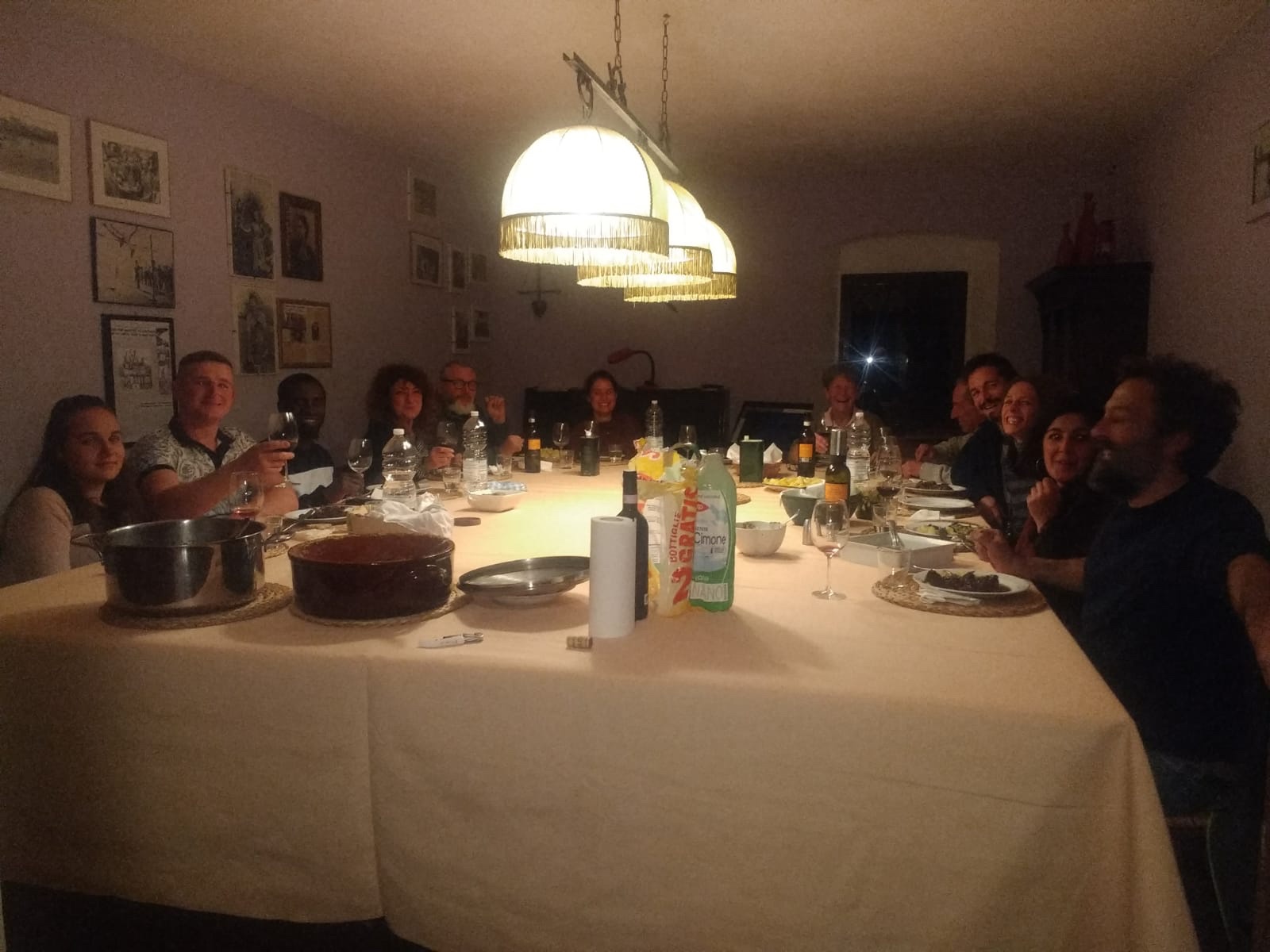
To celebrate the end of the harvest season, the family invited their small team of workers and a few other friends over for dinner. Given that it happened to coincide with the third Thursday of November, I treated it as my own Tuscan Thanksgiving, and it was rightly a feast of such epic proportions.
I spent the day with Emma watching some of the most traditional Tuscan dishes come to life. The crowd-pleaser of the night was the ribollita, which literally translates to “reboiled” and is a staple of Tuscan cuisine, exemplifying la cucina povera by converting poor man’s ingredients (stale bread) to a savory, hearty soup that warms the hearts of farmers. I believe the secret lies in the very first step: the rendering of a big slab of pancetta fat in the typical Italian soffrito of celery, onions, and carrots, always with a healthy pour of olive oil (their own, of course) that forms the base of all dishes in central Italy in contrast to the butter-rich sauces of the north. This simple action establishes a rich baseline of flavor that penetrates the many layers of bread, cavolo nero (lacinato kale), white beans, cabbage, and potatoes. Like a lot of humble dishes, it might not look like much, but it is to die for.
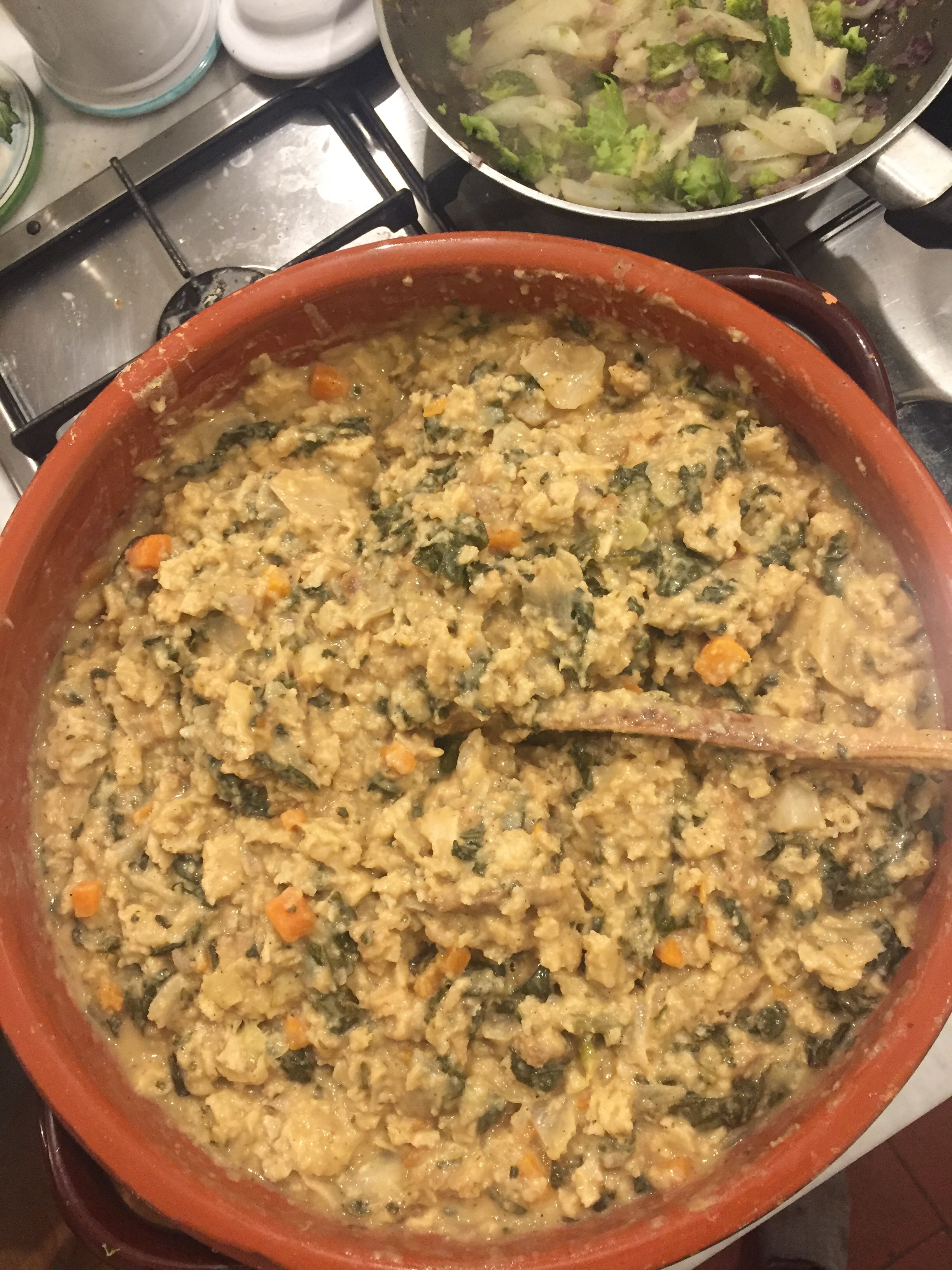
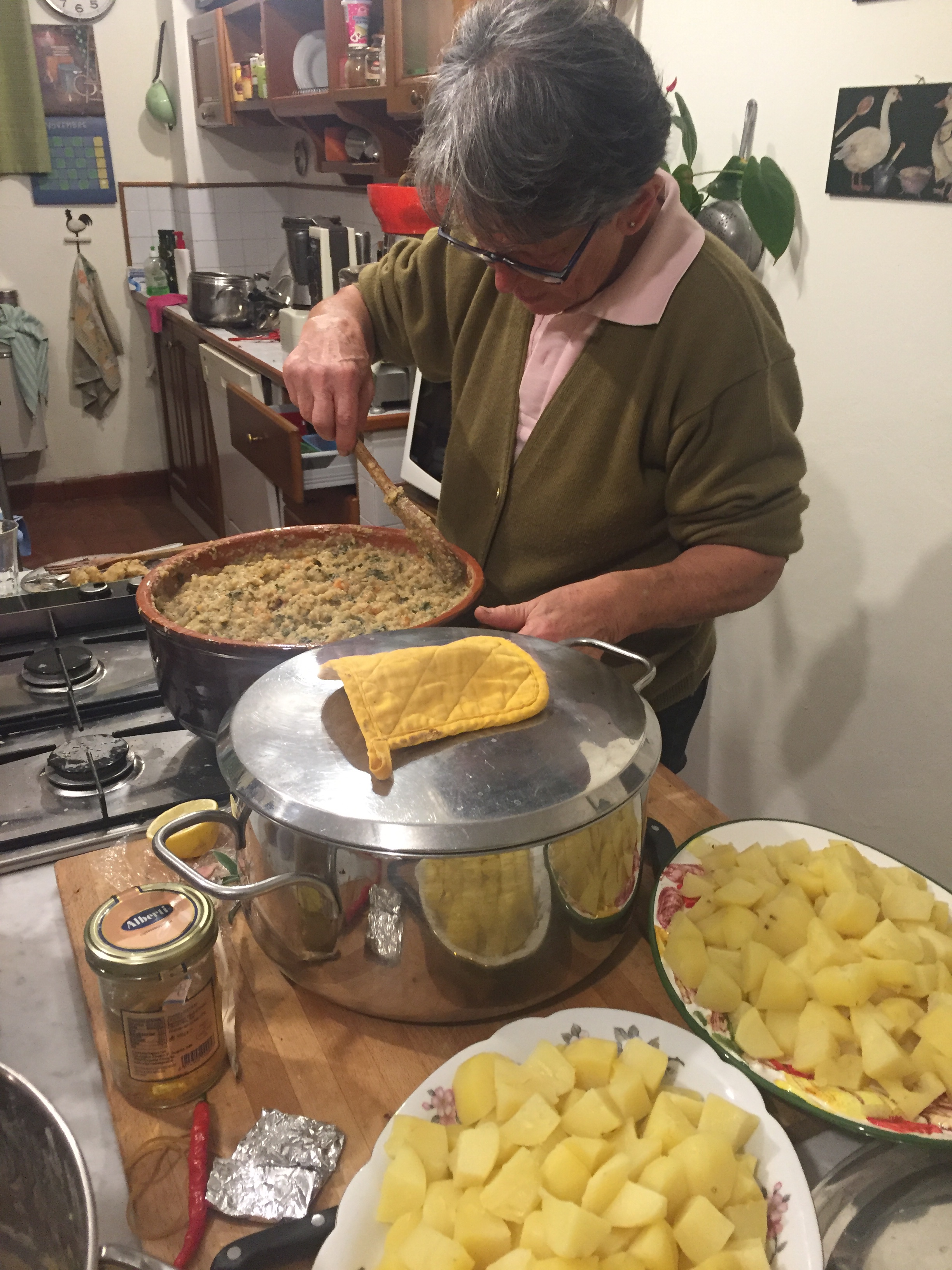
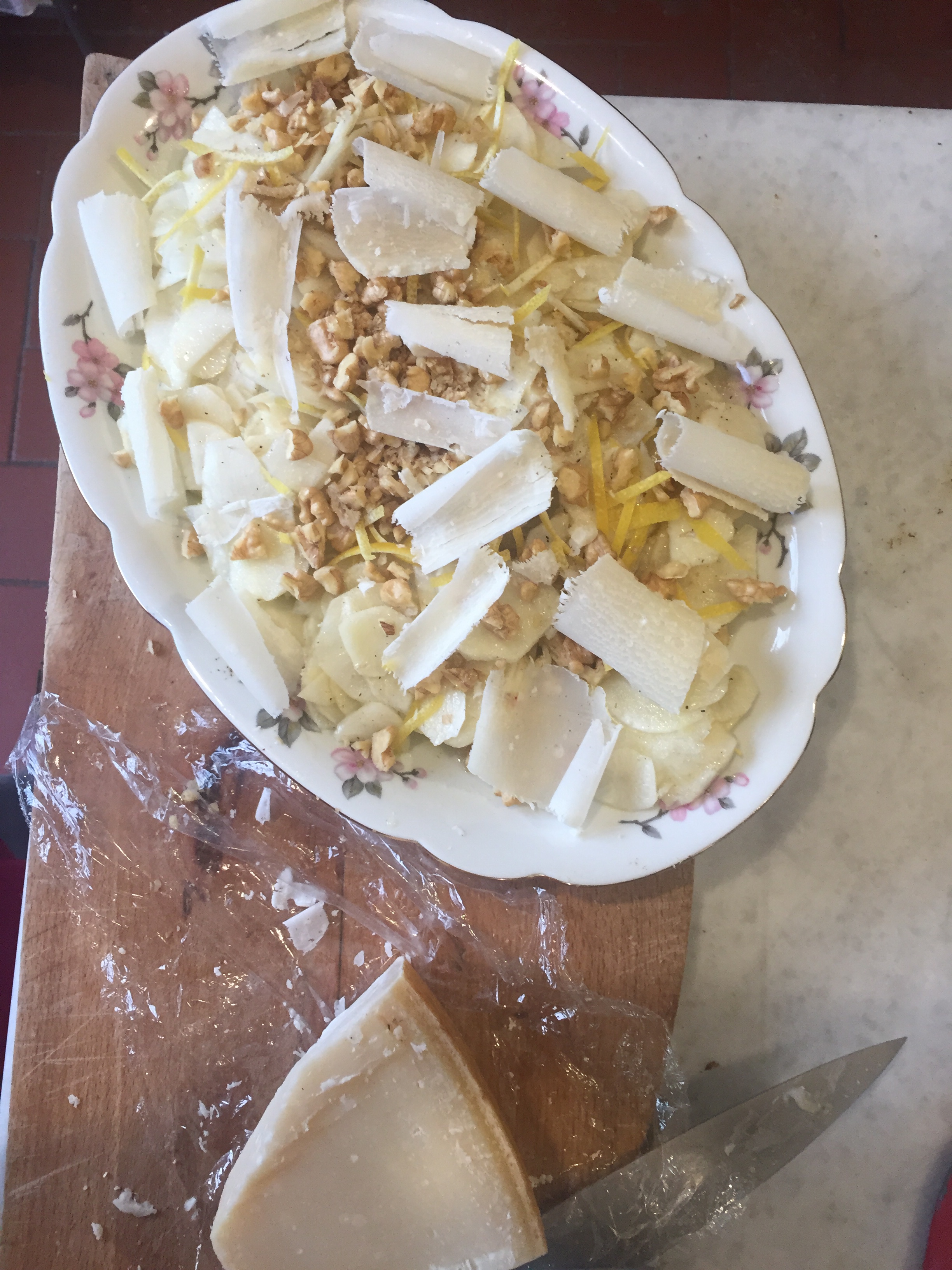
I helped Emma and Giancarlo prepare the dining room, placing wood panels they’d cleverly made themselves to perfectly cover their billiard table – voila, one giant table for all your friends! The table was so massive that we couldn’t reach the center, but that didn’t stop us from piling it with the night’s feast which came out in seemingly never-ending waves: bowls of incredibly flavorful cavolo nero pesto and smooth chicken liver pate (which my fellow diners devoured but I still cannot warm up to the taste of), both smothered on warm bread, beef stew, and a vegetarian dish featuring a tuber I’d never heard of.
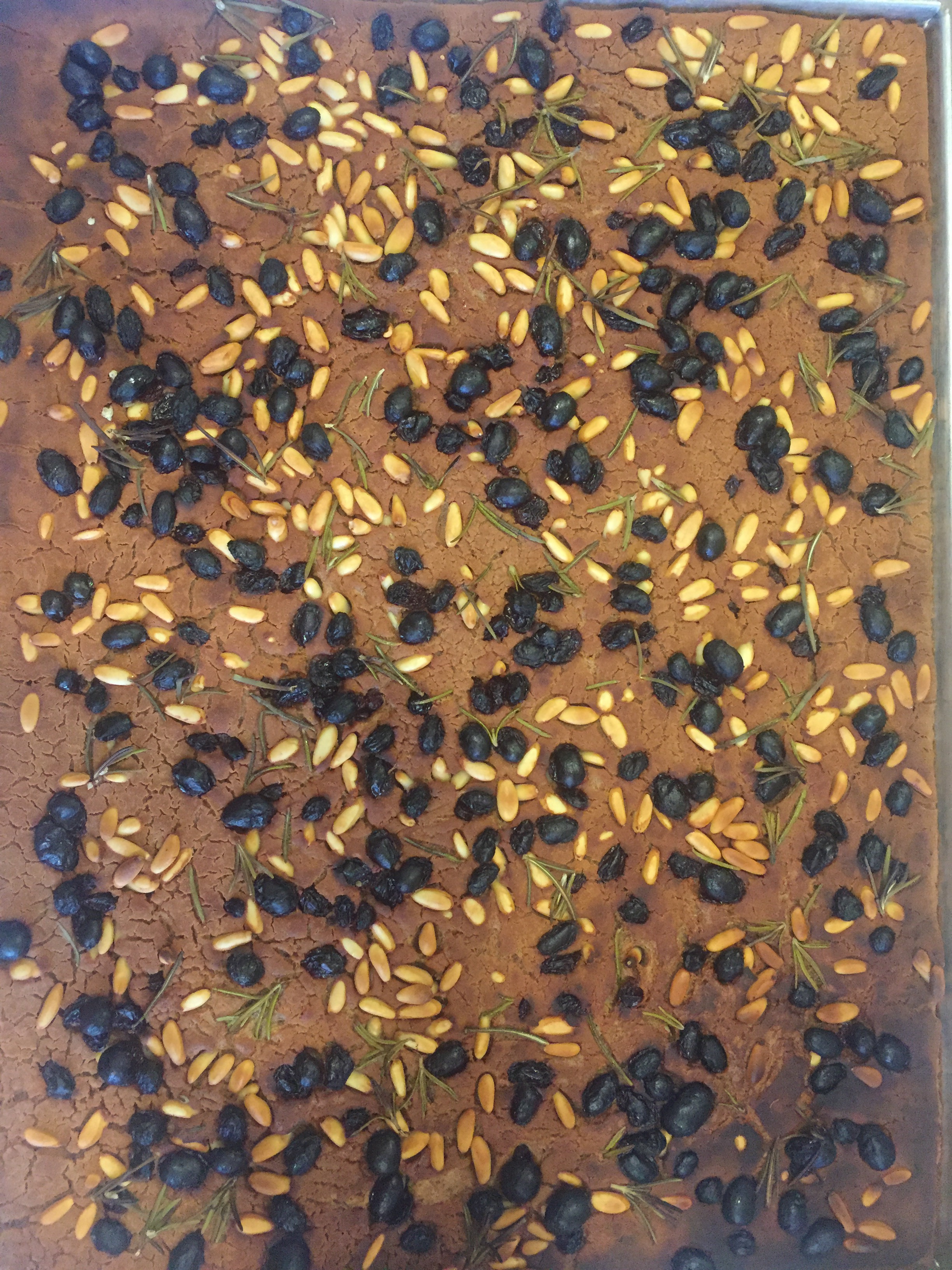
Topinambur, also known as German turnip or Jerusalem artichoke, was thinly shaved and dressed in olive oil, lemon peel, walnuts, and large pieces of shaved parmigiano reggiano, a welcomed lighter dish that broke up bites of rich meats and cheeses. After the gigantic, heavy pot of boiling ribollita emerged, I didn’t think I could eat one more bite, but we couldn’t forget about dessert: Emma’s castagnaccio – a mildly sweet, thin cake made of chestnut flour, golden raisins, pine nuts, and rosemary, and a friend’s beautiful homemade fruit cream pie. Like Thanksgiving back at home, I was completely full, and grateful to be surrounded by such wonderful people and food.
…
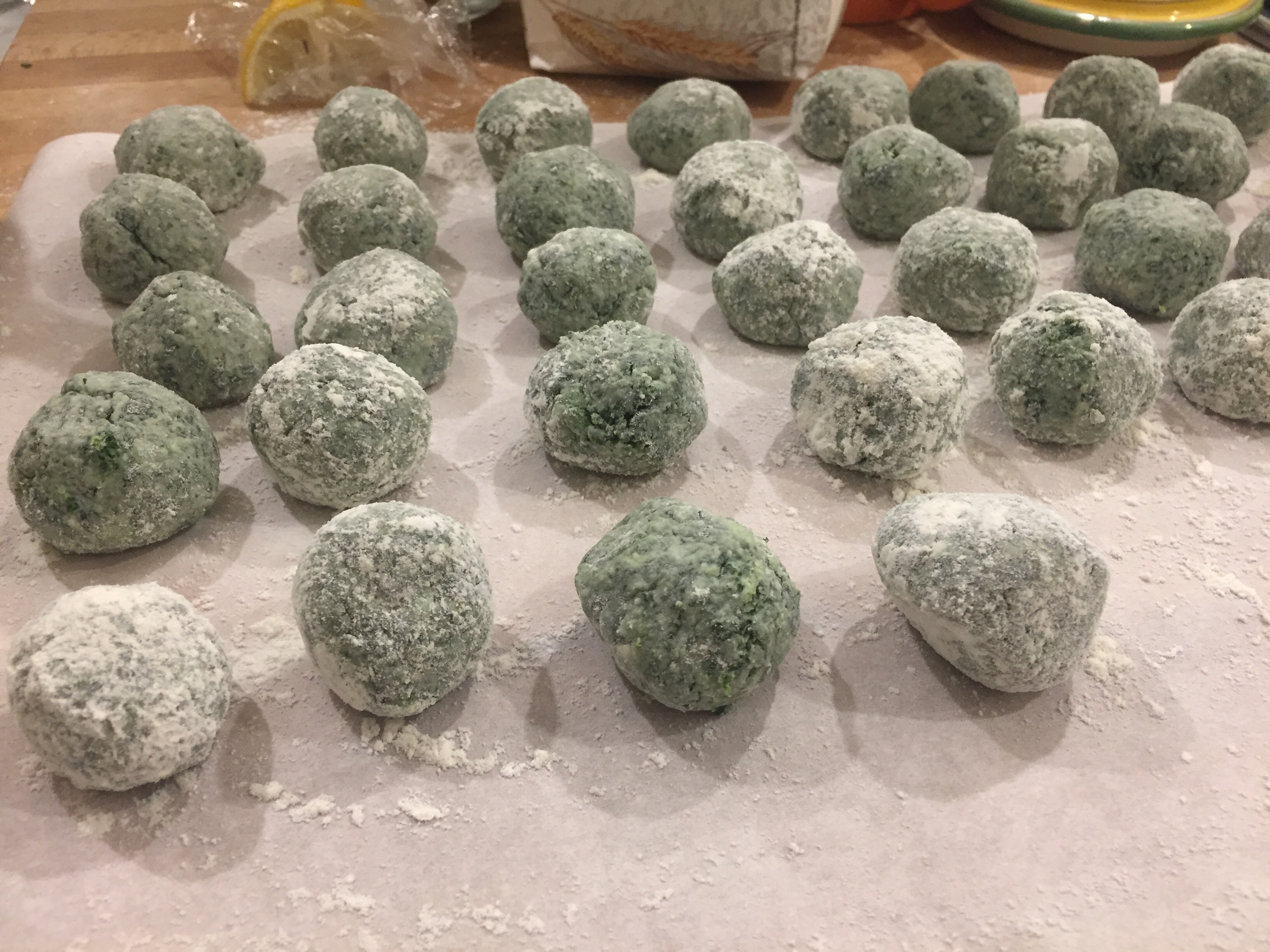
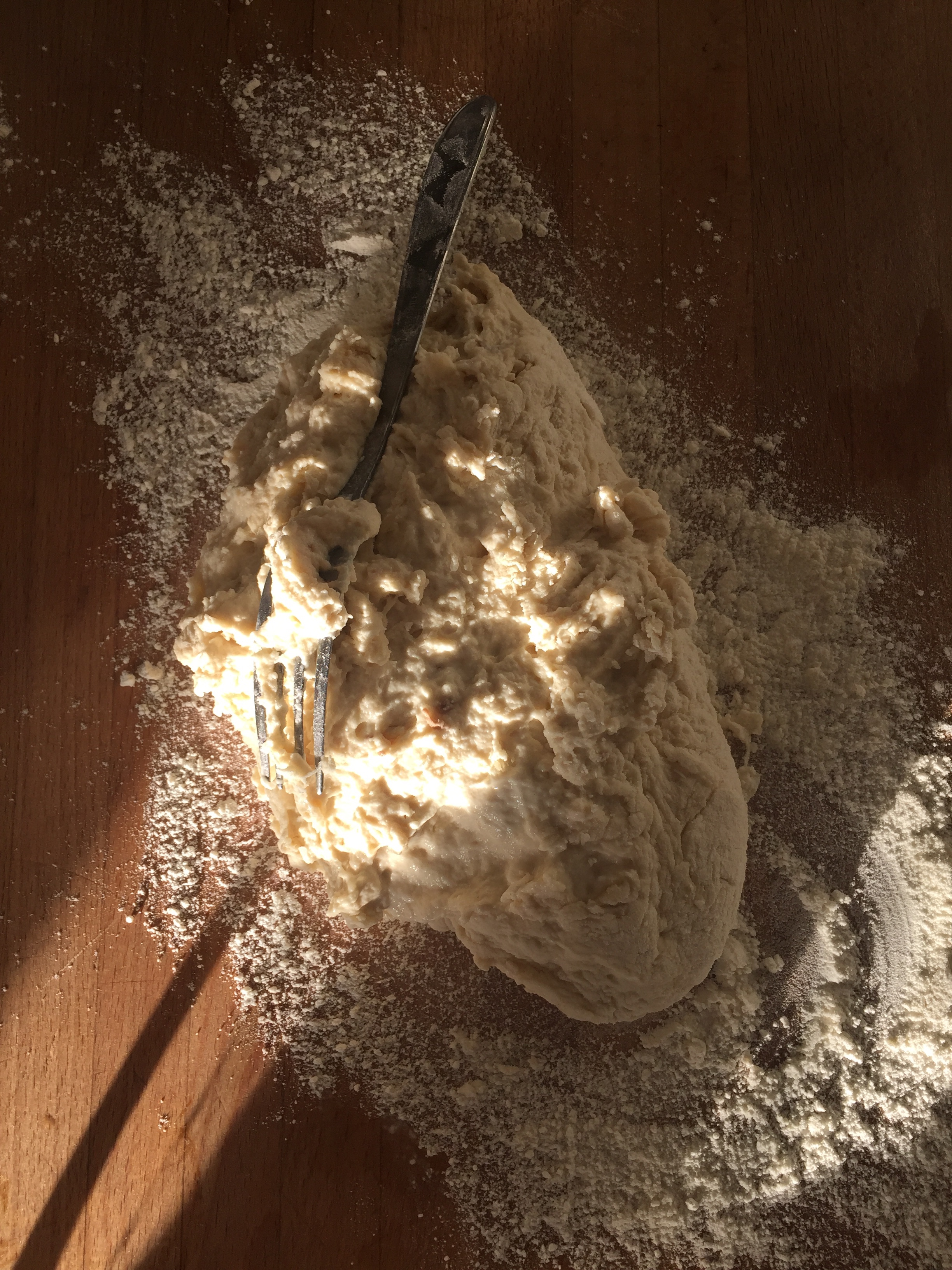
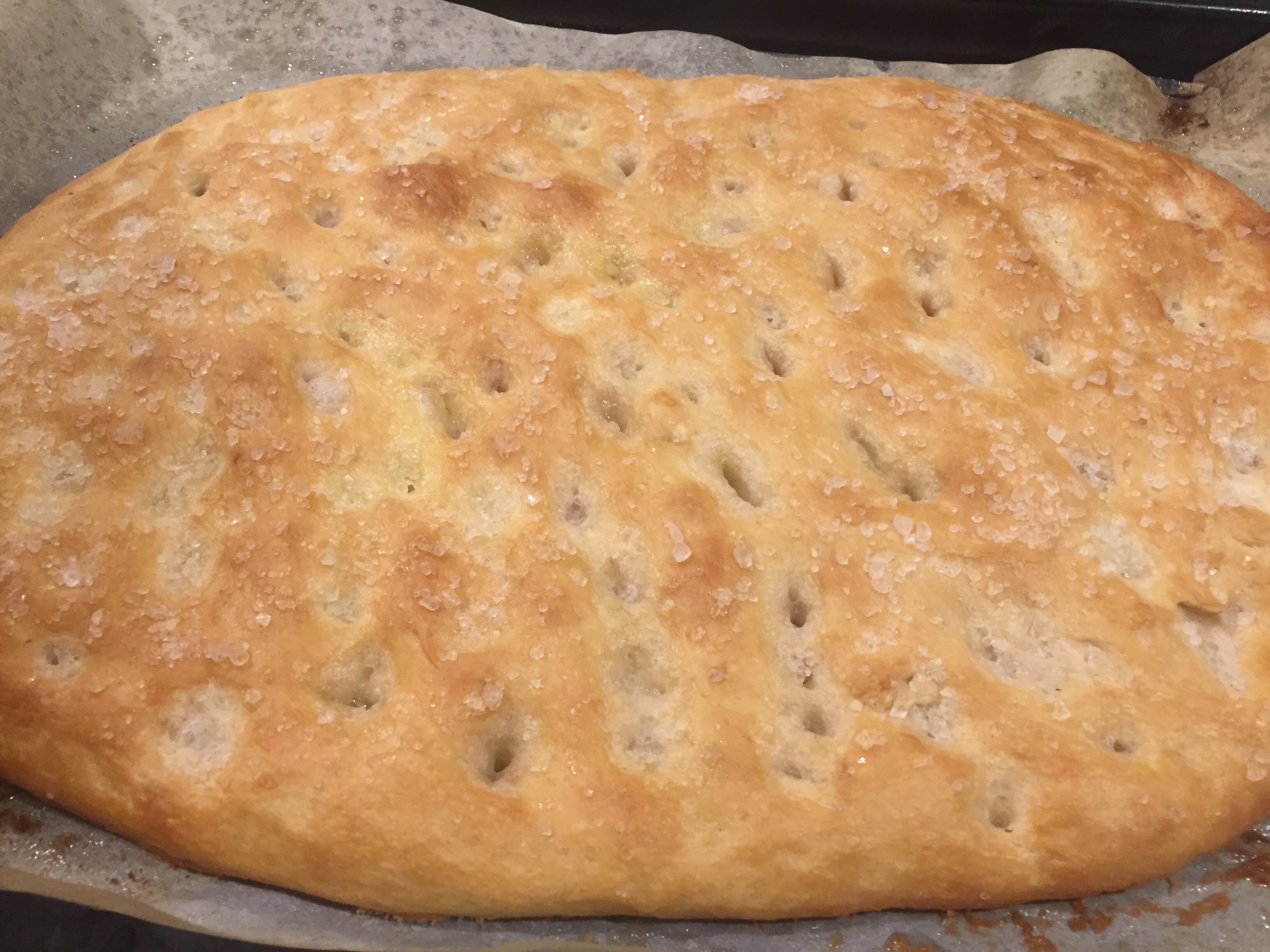
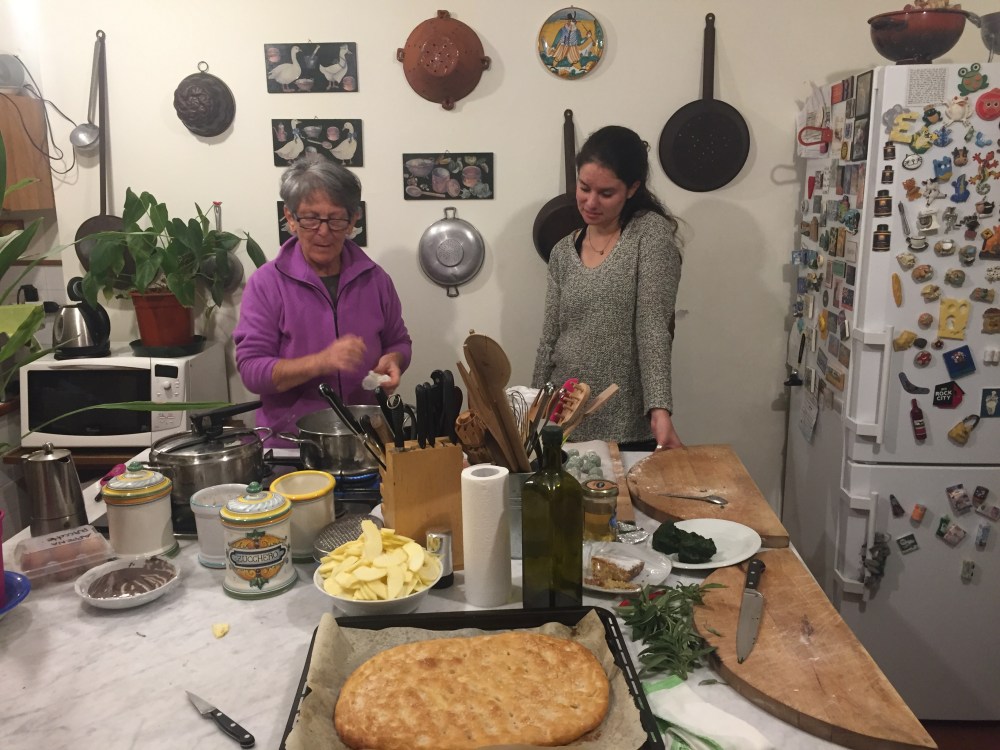
It was only fitting that I spent my last night at Casa Pietraia (and in Tuscany) hanging out in the kitchen. For our last dinner I learned how to make schiacciata, a regional focaccia that gets its name by the “squishing” action of pressing your fingers into the wet dough to create holes that trap heavenly pools of olive oil and salt. While the dough proved and baked away we prepared the main course, gnocchi nudi, a “nude” version of the heavier potato- and flour-based Italian dumpling: ricotta, spinach, and a light dusting of nutmeg, all rolled together into small balls and boiled until rising, then spooned into a bath of browned butter and sage.
I left the next morning after a breakfast of homemade apple cake feeling that those two weeks in that small corner of Tuscany would be some of the most memorable food moments of my trip. Back in the US, this still rings true, and of the many regional cuisines I encountered during those three months, la cucina toscana – with its simple ingredients and inherently heartwarming, rich dishes – remains one of my favorites.
The grey, drizzly skies of the Tuscan winter made the small farmhouse feel even cozier, the kitchen a particularly warm spot, marking the cold day coming to a warm end, and a feeling I can still channel 4,000 miles away on a snowy New England day.

…
If you are curious about Casa Pietraia, want to try their olive oils, or are interested in visiting, reach out to me by commenting below!
 Orchard e Orto